
Transporting an Aquarium – So Tank and Fish Survive the Move
Drain the tank completely, fish into the styrofoam box, keep the filter moist – and if you'd rather not haul it yourself: a van with driver and carrying help, booked in minutes.
- Instant price before booking
- Insured transports
- Carrying help bookable
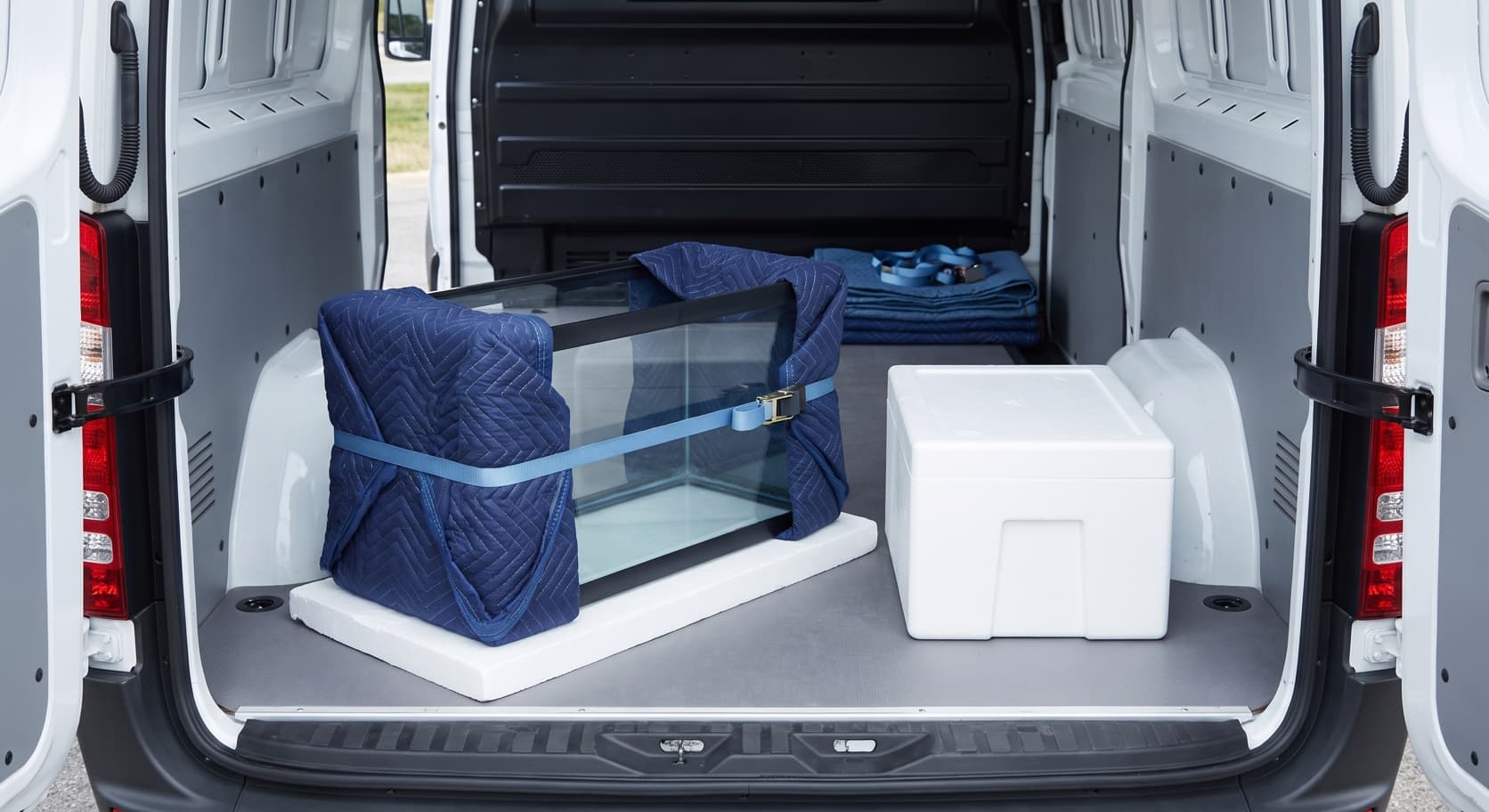
How to Transport an Aquarium Properly
Empty the tank completely
An aquarium always travels empty: pump out the water, remove the substrate on tanks over 60 liters, take down the equipment. The glued seams are designed for even standing pressure – not for sloshing cargo. Even 100 liters of water mean 100 kilograms in motion.
Look after fish and filter
Fish travel in transport bags or a styrofoam box – the pet shop fills bags with oxygen on request. Keep filter media moist in a bucket of aquarium water: if the bacterial culture dries out, the cycling phase starts over.
Load padded and strapped
Stand the empty tank on a styrofoam sheet or folded blanket, never lift it by the glued edges, and don't pivot it on a corner. In the van, pad it with blankets and strap it so no edge takes pressure.
Which vehicle do you need?
A 60-liter tank weighs around 15 kg empty, a 200-liter tank 40 kg and more – plus cabinet, equipment, and buckets. From 100 liters including accessories, the compact van is the safe choice. All dimensions and payloads in the van guide →
Transporting an aquarium: the right preparation
An aquarium move is a small logistics task: tank, equipment, substrate, plants, and livestock each have their own requirements. Start early on moving day: switch off and dismantle the equipment, fill part of the aquarium water into clean buckets or canisters – it helps with refilling later and keeps filter and plants moist.
Then net fish and shrimp into transport bags or a styrofoam box, lay plants moist into buckets, and remove the substrate on tanks over 60 liters. Only the completely emptied tank gets prepared for transport: dry on the outside, padded with blankets, edges clear.
Transport an aquarium with water in it? No – here's why
The tempting shortcut of "leaving a little water in" is the most common cause of leaking tanks. An aquarium's silicone seams are designed for even, resting standing pressure. During the drive, however, water slaps against the panes in surges – even 100 liters mean 100 kilograms in motion, tugging at the glued seams point by point.
Add the weight: a half-filled 200-liter tank is practically uncarryable, and any remaining substrate grinds against the bottom pane with every jolt. So the rule has no exception: drain completely, remove substrate from 60 liters upward, and the tank travels dry and padded.
Fish, plants, and filter on moving day
Livestock copes well with a moving day if three things are right: oxygen, temperature, darkness. Fish travel in transport bags filled one third with aquarium water – the pet shop adds oxygen on request – or in a styrofoam box that also holds the temperature. Darkness calms the animals.
Plants stay moist in buckets or bags, and filter media go into a bucket of aquarium water: the bacterial culture in the filter must not dry out, or the tank's cycling phase starts over. At the destination, set up and fill the tank first and connect the equipment – then float the bags on the water to equalize temperature and move the fish over slowly.
Carrying and loading without broken glass
Glass tanks have two sensitive points: the glued seams and the corners. So never lift by the top rim or the seams – always grip from below, with two people and non-slip gloves. Don't tip the tank over a corner or rotate it on one edge; that loads exactly the seams that have to be watertight again later.
In the vehicle, the tank stands on a styrofoam sheet or thick blanket that evens out the load floor. Pad it all around with blankets and secure it with straps without pressure on the panes – our glossary article on load securing shows how lashing straps should sit. Strap cabinet and equipment separately.
Freight forwarder, courier, or van with driver?
For an aquarium with live stock, a classic freight forwarder is practically ruled out: long delivery windows, transloading at the depot, no control over temperature and vibration. Tank and livestock belong in one run without transloading – and the drive as short as possible.
A van with driver takes tank, cabinet, equipment, and the styrofoam box with the livestock in one direct drive – with Maxmove same-day if you like, with carrying help for the tank. You see the binding price in advance in the transport cost calculator.
Frequent Questions About Aquarium Transport
How much does the transport cost?
Enter the route, choose the vehicle, add carrying help if needed – the price for your aquarium transport is fixed in seconds.
Calculate the price in seconds