
Transporting a Freezer – Defrosted, Upright, No Compressor Damage
Defrost 12 to 24 hours ahead, wipe dry, load upright – and if you'd rather not carry it yourself: a van with driver and carrying help is booked in minutes.
- Instant price before booking
- Insured transports
- Carrying help bookable
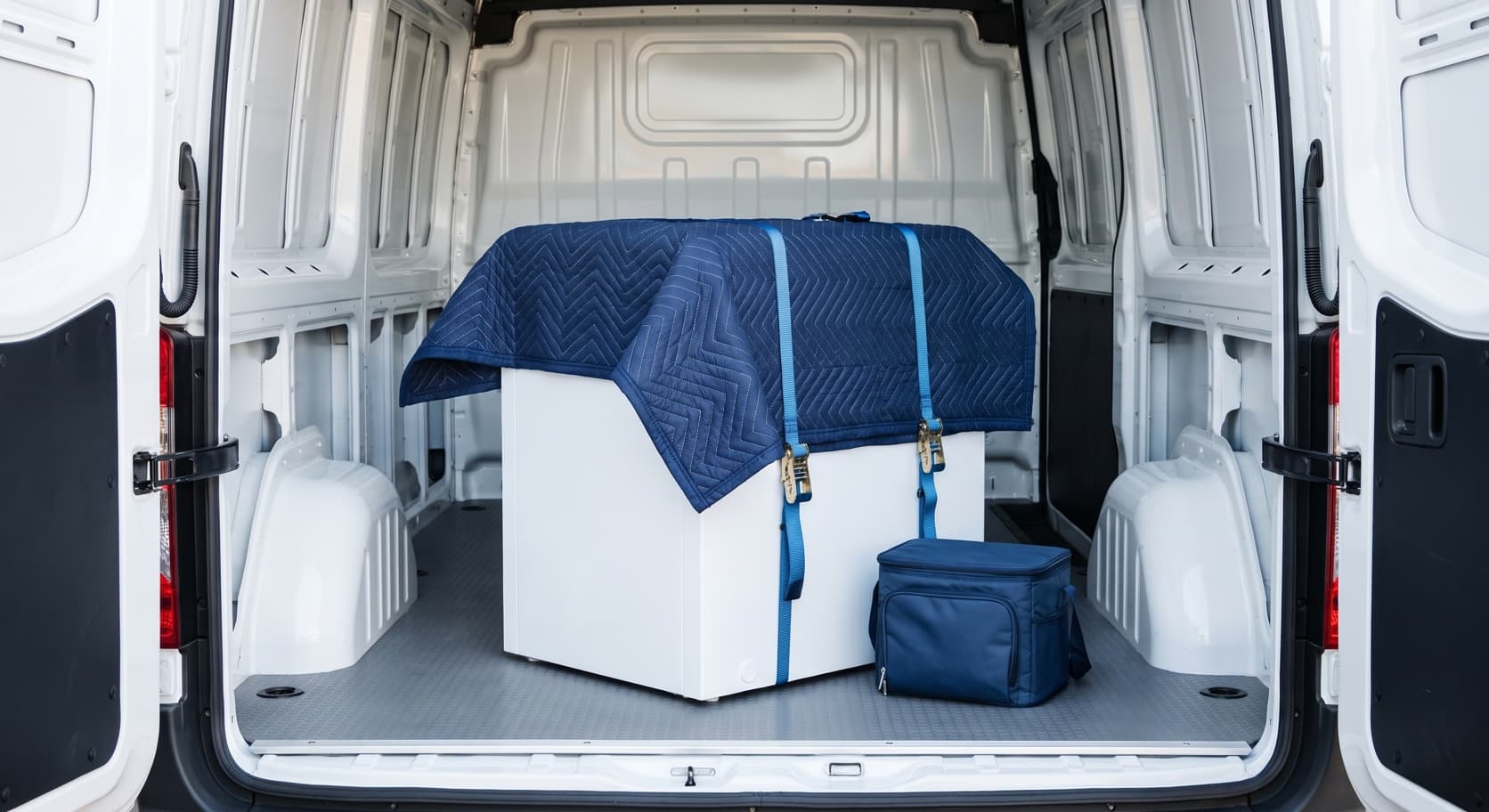
How to Transport a Freezer Properly
Defrost in time
Switch the appliance off 12 to 24 hours before the move and let it defrost with the lid open. Soak up meltwater with towels and wipe the interior dry – otherwise it runs into the housing and onto the load floor during the drive.
Relocate the frozen food
Move frozen goods into cool boxes or bags with ice packs, or plan to use them up in the days before the move. Well-filled cool boxes keep frozen food solid for several hours – enough for most transports within a city.
Load upright and strap down
Chest and upright freezers belong upright on the load floor, secured with lashing straps, lid or door taped shut. The refrigerant circuit with its compressor tolerates lying transport only as an exception.
Which vehicle do you need?
A chest freezer weighs 40–80 kg depending on volume, an upright freezer 60–100 kg. Small chests fit in any compact van; for large chests from 300 liters and upright freezers, the 2.7 m class with a hand truck and second person is worth it. All dimensions and payloads in the van guide →
Transporting a freezer: the right preparation
The real transport of a freezer starts a day earlier: the appliance has to defrost completely so no meltwater runs into the housing, the electronics, or onto the load floor during the drive. Switch the freezer off 12 to 24 hours before the appointment, lay out towels, and leave the lid or door open. Then wipe the interior dry – which also prevents mold and odors if the appliance doesn't run again right after the move.
For the frozen food: eat down what you can in advance and move the rest into cool boxes with ice packs. Take out loose parts such as baskets, dividers, and drip trays and pack them separately, secure the lid or door with masking tape, and fix the power cable to the housing.
Transporting a freezer lying down: emergencies only
Like a fridge or a heat-pump dryer, a freezer runs a refrigerant circuit with an oil-lubricated compressor. Lying down, compressor oil can migrate into the refrigerant lines – switch the appliance on too early afterwards and you risk compressor damage, the economic write-off of the appliance.
So the rule is: transport upright, secured with straps. If lying down truly cannot be avoided, lay the appliance on the side specified by the manufacturer – the manual names it – and never on its back, front, or lid. Our glossary article on load securing shows how the straps should sit in the vehicle.
After the move: standing time before switching on
After an upright transport, let the freezer stand for a few hours before plugging it in – this lets the compressor oil settle. If the appliance was tilted or lay down for a while, the waiting time extends to 12 to 24 hours. The power stays off until then, however tempting the empty freezer compartment looks.
Once switched on, the freezer needs several hours to reach its target temperature of −18 °C. Only then put frozen goods back in – ideally straight from the cool box while still frozen solid. Partially thawed food should not be refrozen; use it up promptly instead.
Carrying a freezer: bulky, top-heavy, smooth walls
A chest freezer carries differently from a cabinet: it is wide, has no handles, and the compressor makes one corner noticeably heavier. Always carry with two people, grip under the base rather than the lid edge, and keep the appliance as level as possible. For stairs, carrying straps or a hand truck with stair climbers are the right choice – appliance upright, secured with a strap, set down briefly on every landing.
Measure door widths and stair turns beforehand: large chests from 300 liters are often wider than a standard door and have to pass through on end – even then: never upside down.
Freight forwarder, courier, or van with driver?
A classic freight forwarder rarely pays off for a single freezer: long delivery windows, delivery often only to the curb – and the appliance is defrosted and needs to get back on power quickly. A van with driver picks the freezer up where it stands: with Maxmove same-day on request, with carrying help out of the basement or up to the third floor, loaded upright and strapped down.
You see the binding price in advance in the transport cost calculator. If the freezer moves as part of a full move, our moving checklist helps – from the defrosting date to switching back on.
Frequent Questions About Freezer Transport
How much does the transport cost?
Enter the route, choose the vehicle, add carrying help if needed – the price for your freezer transport is fixed in seconds.
Calculate the price in seconds