
Quick answer: A Sprinter L2H2 has roughly 3.2 × 1.7 × 1.8 m of load space and usually carries 900–1,200 kg. A long L3H2 provides about 4.3 m of load length, but its higher kerb weight does not automatically mean more payload.
"Will it fit in a Sprinter?" is one of the most common questions before a transport—followed by "How heavy can it be?" The table below compares load-area dimensions, payload, pallet capacity, and the overloading risk across the main van classes.
Sprinter van dimensions: vehicle classes at a glance
Reference values for common models (Mercedes Sprinter, VW Crafter, Ford Transit, Fiat Ducato, and similar) – individual configurations vary:
| Class | Load area (L × W) | Load height | Volume | Payload | Euro pallets |
|---|---|---|---|---|---|
| Car / estate | up to 1.9 × 1.0 m (seats folded) | 0.7–0.8 m | 1.5–2 m³ | 400–500 kg | – |
| Compact van (Caddy, Kangoo) | 1.8 × 1.2 m | 1.1–1.25 m | 3–4 m³ | 600–700 kg | 1–2 |
| Mid-size van (Vito, Transporter, Vivaro) | 2.4–2.9 × 1.6 m | 1.3–1.4 m | 5–8 m³ | 800–1,100 kg | 2–3 |
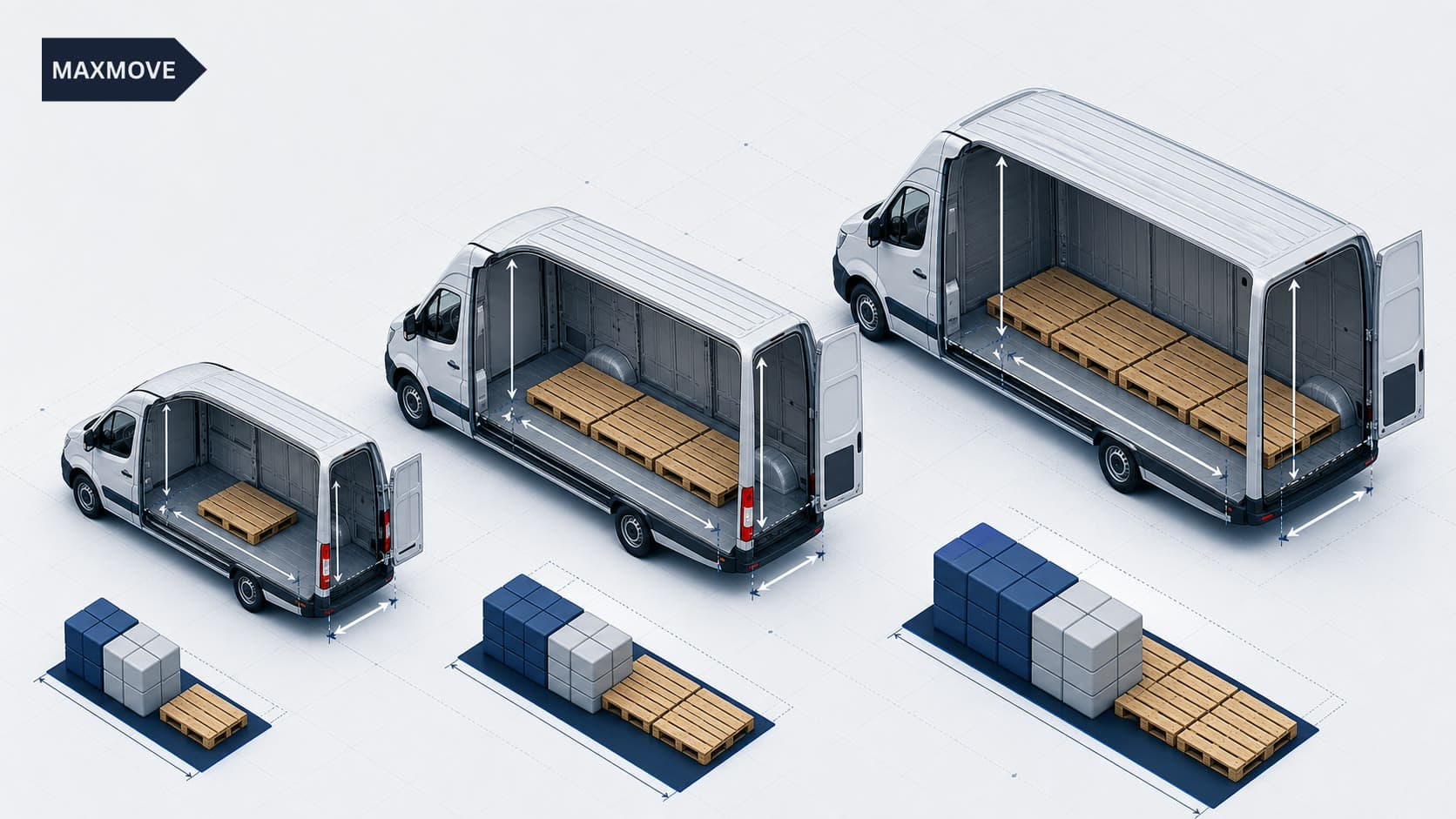
| Sprinter L2H2 | 3.2 × 1.7 m | 1.8 m | approx. 10 m³ | 900–1,200 kg | 3–4 |
| Sprinter L3H2 (long wheelbase) | 4.3 × 1.7 m | 1.8–2.0 m | 13–14 m³ | 800–1,100 kg | 4–5 |
| 3.5-tonne box van | 4.2 × 2.1 m | 2.1–2.3 m | 17–20 m³ | 900–1,400 kg | 8 |
| 3.5-tonne flatbed | 4.2 × 2.1 m | open | – | 1,000–1,500 kg | 8 |
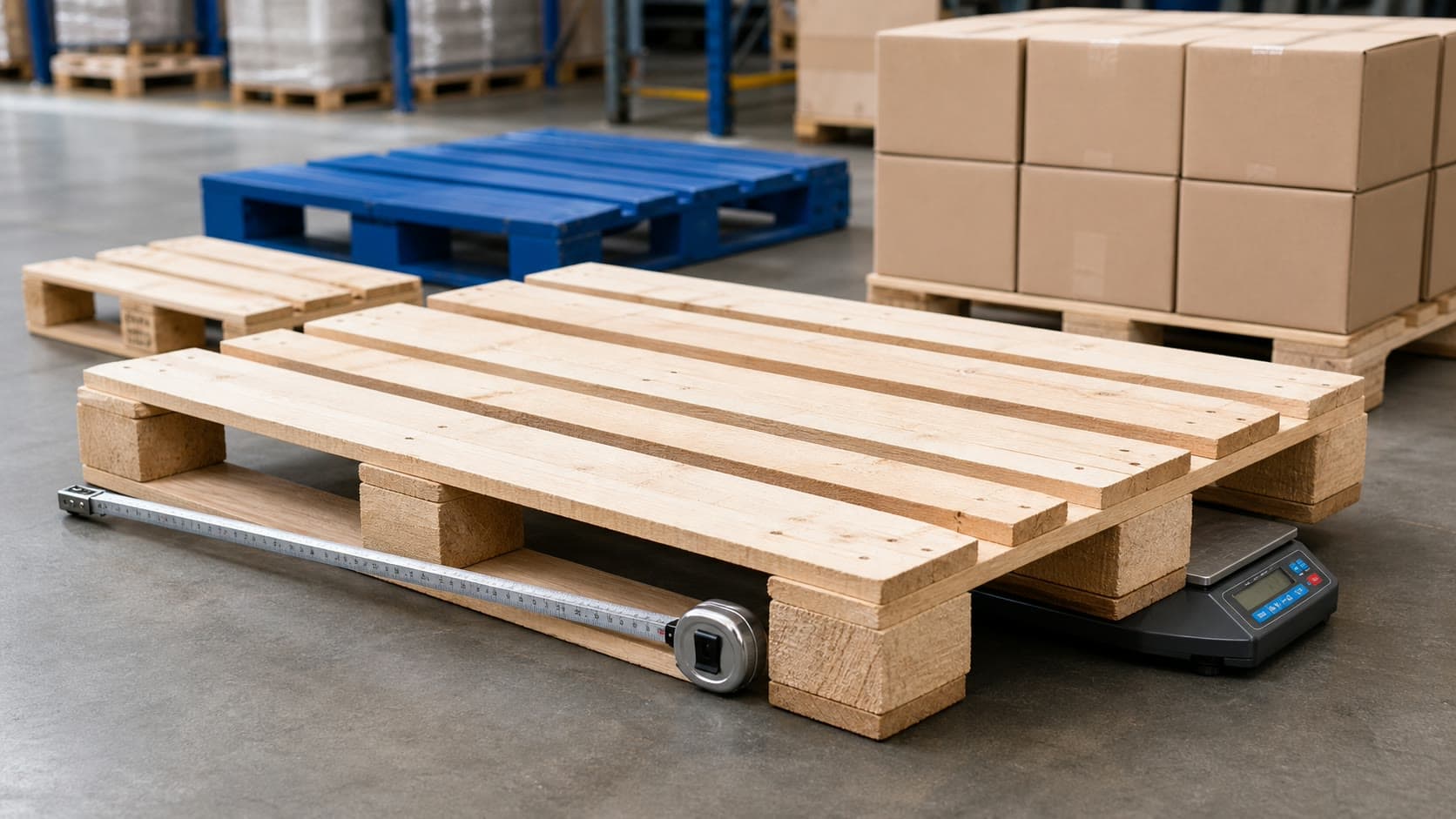
Two measurements that are often overlooked: the width between the wheel arches (approx. 1.35 m on a Sprinter – a euro pallet fits exactly crosswise) and the rear door opening, which on box bodies can be smaller than the cargo space itself.
Sprinter L2H2 vs L3H2: the main differences
- Sprinter L2H2: approximately 3.2 m load length, 1.7 m interior width, 1.8 m load height, and about 10 m³ of volume. Suitable for 3–4 euro pallets, furniture, and general cargo.
- Sprinter L3H2: approximately 4.3 m load length, 1.7 m interior width, and 1.8–2.0 m load height at 13–14 m³. Suitable for long goods and 4–5 euro pallets.
- Payload: L3 means more space, not more weight. The longer body can reduce available payload, so the registration document remains authoritative.
Payload: the 3.5-tonne trap
The most important number is not on the load floor but in the registration document: the permissible gross weight. For the popular 3.5-tonne class:
Payload = 3,500 kg − curb weight (incl. driver, fuel, fittings)
A 3.5-tonne box van with tail lift easily weighs 2,300–2,600 kg empty – leaving only 900–1,200 kg of payload, not "three and a half tonnes." How to read the curb weight correctly is explained in our glossary entry curb weight in the vehicle registration. Or enter your vehicle's F.2 and G right here:
Calculate payload from your registration document
Fields F.2 and G of the Zulassungsbescheinigung Teil I. Optionally add the load you want to carry.
Old Fahrzeugschein (before October 2005): item 15 = gross weight, item 14 = kerb weight.
Maximum payload
Enter both values from the registration document.
Overloading is no trivial offence in Germany: fines start at 5% over, points on the license at around 20% – and insurers get difficult after accidents. Rule of thumb: with heavy loads, the scale decides, not the space.
Which vehicle for which transport?
- Documents, parcels, small items: car or compact van – cheapest class, fastest in cities.
- Furniture, washing machine, 1–2 pallets: mid-size van or Sprinter L2 – fits any street, takes a small sofa as easily as two euro pallets.
- Boxes of a 2-room flat, 3–4 pallets, long goods: Sprinter L3 – the 4.3 m load floor also takes shelving and pipes.
- 6–8 pallets, trade fair equipment, heavy machine parts: 3.5-tonne box van, ideally with tail lift – but watch the payload.
- Bulky goods, special dimensions, sensitive freight: a special transport with an exclusive vehicle.
When booking via Maxmove you pick the vehicle class right in the form – the transport cost calculator instantly shows what each class costs on your route. For pallets there is the dedicated pallet transport; all dimensions of the load carriers themselves are in the euro pallet guide.
Transporting furniture in a van – what must you observe?
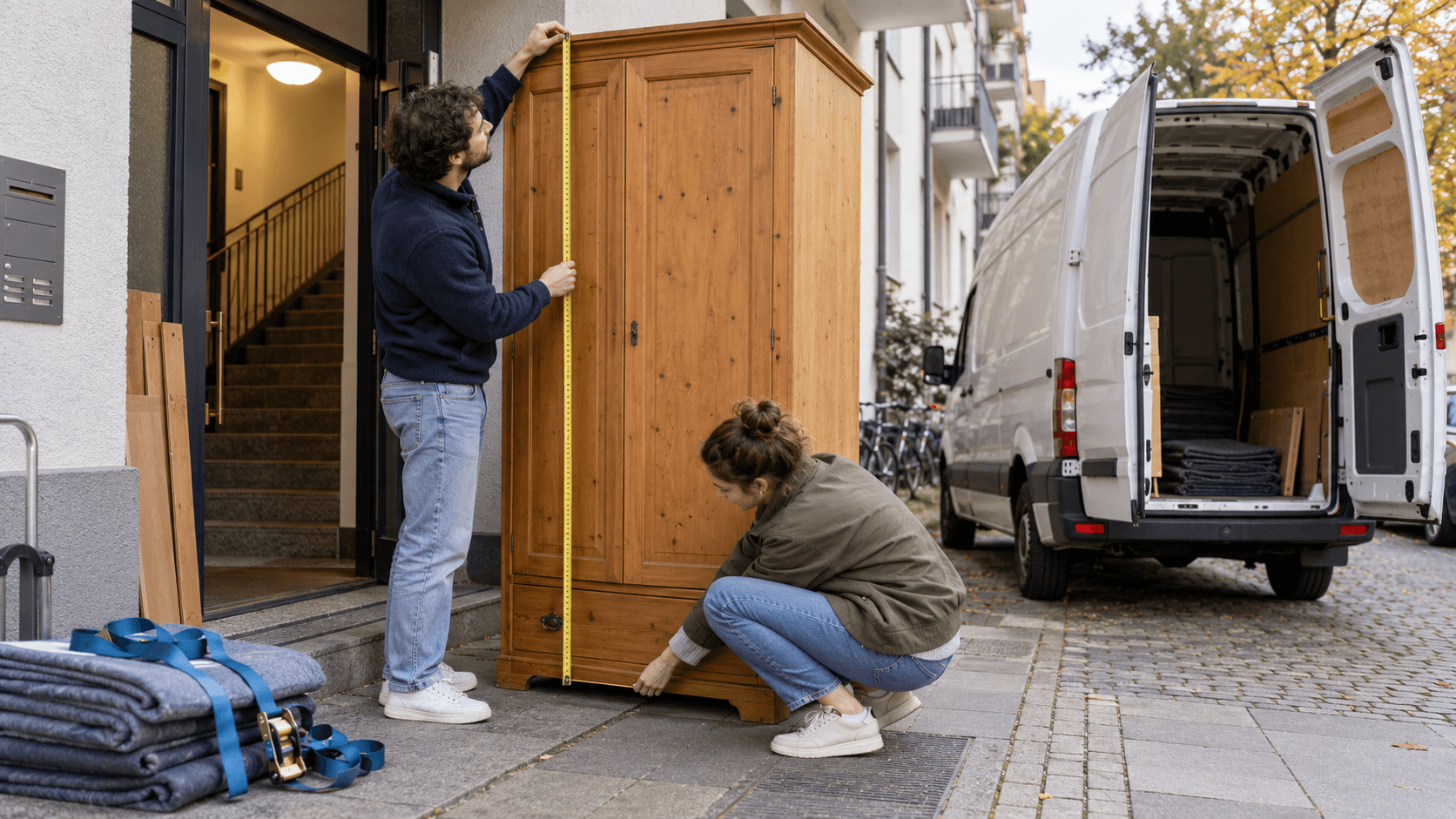
A classic from the German driving-theory exam – and the practical answer: the load must be secured so that it cannot slide, tip, or fall even under emergency braking or a sudden evasive maneuver (§ 22 StVO). In practice: load furniture flush against the front wall, strap it to the lashing points, put heavy pieces at the bottom – and place blankets between items to prevent chafing. Also keep the payload in view (see above) and never block the driver's sight. The fundamentals are covered in our glossary entry on load securing.
Frequently asked questions
How big is a Sprinter's load area? About 3.2 × 1.7 m on the medium wheelbase (L2), about 4.3 × 1.7 m on the long wheelbase (L3) – with 1.8 to 2.1 m load height depending on the roof.
What can a Sprinter carry? 800–1,200 kg depending on configuration. What counts is permissible gross weight minus curb weight – as stated in the registration document.
How many euro pallets fit in a Sprinter? 3–4 (L2) or 4–5 (L3) – though rarely all fully loaded, for weight reasons.
Can I drive a 3.5-tonner with a car license? Yes, class B covers up to 3,500 kg gross weight – exactly why this class is so widespread.
What happens if I overload? Fines from 5% over the limit, a license point from roughly 20%; in an accident you risk your insurance cover. When in doubt, weigh – or book the next class up.
Verified source data: every dimension in this article is published with its source, retrieval date and calculation method in the Maxmove Transport Reference 2026 — as CSV under CC BY 4.0.