
Transporting an E-Bike – Bike and Battery Arrive Safely
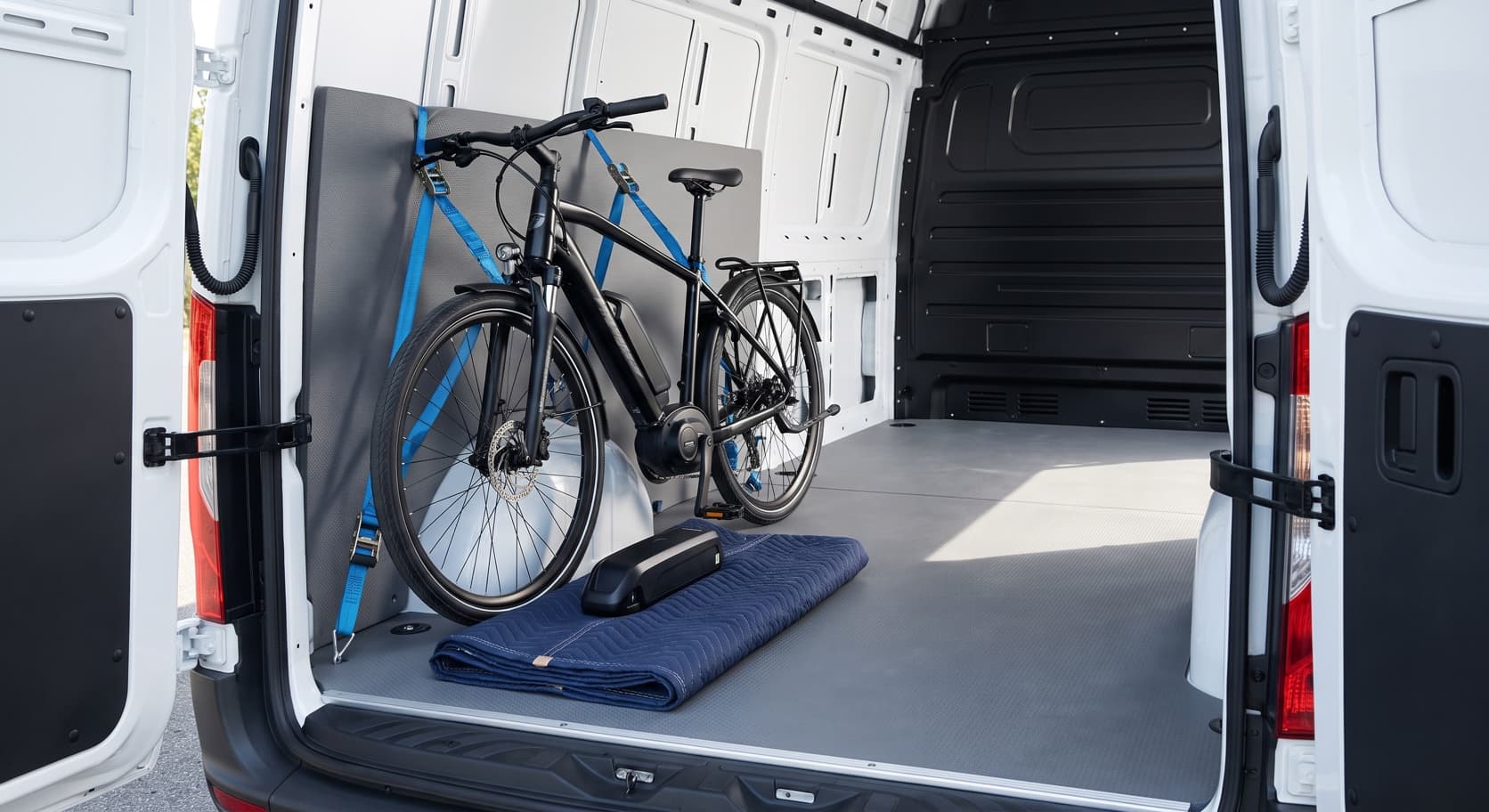
Battery out, bike strapped upright by the frame, battery padded at room temperature – and if you have neither a rack nor a van: a driver with the right vehicle is booked in minutes.
- Instant price before booking
- Insured transports
- Carrying help bookable
How to Transport an E-Bike Properly
Remove battery and display
The battery never stays on the bike: remove it, cover the contacts, and transport it separately. Take off the display and loose attachments too – they are the first parts to break if the bike tips or shifts.
Load upright and strap by the frame
The bike belongs upright on the load floor, secured with straps on the frame – not on the handlebar or seatpost. With carbon frames, don't crush the straps onto the frame tube; place them wide and padded.
Carry the battery padded and temperate
The battery travels padded and at room temperature – ideally in the cabin. Frost in winter and heat in summer damage the cells; a parked vehicle is no place for the battery.
Which vehicle do you need?
An e-bike weighs 20–30 kg and fits upright into any compact van; with two people it's loaded in minutes. If several bikes or a cargo bike are moving, the 2.7 m class is worth it. All dimensions and payloads in the van guide →
Transporting an E-Bike: The Right Preparation
At 20 to 30 kilograms, an e-bike is considerably heavier than a normal bicycle – and its most expensive component, the battery, is also its most sensitive. Preparation therefore always starts the same way: remove the battery, cover the contacts, take off the display and loose attachments such as bags, bottle holders, or panniers.
Pad the frame and fork at the contact points with blankets or foam, especially where straps sit or the bike leans against a wall. Unscrewing the pedals and turning the handlebar slightly saves space and avoids scratches on neighboring items.
Lying Down or Upright – and Where Does the Battery Go?
An e-bike is transported upright. Lying down, the weight presses on the derailleur, display mount, and drive side, and oil from suspension forks can run into the damping chambers. If lying flat in a car truly can't be avoided: drive side up, pad every contact point.
The battery stays separate from the bike in every case: padded, contacts covered, at room temperature – ideally at a medium state of charge. Frost and heat permanently damage lithium cells; the battery has no business staying in the trunk overnight or in blazing sun.
Rear Rack, Van, or Shipping?
The rear rack is the obvious solution – but many models are only rated up to 25 to 30 kilograms per rail. Two e-bikes push older racks to their limit; the load rating is in the manual and on the type plate. Battery and display always come off and go into the cabin, rack or not.
Parcel shipping is the most complicated option for an e-bike: dangerous-goods rules apply to the lithium battery, and many services accept batteries above certain capacities only separately or not at all. A courier with a van, by contrast, takes the complete bike – battery included, no box, no disassembly. Simpler rules apply to regular bikes without a motor: see bicycle transport.
Loading and Securing an E-Bike
20 to 30 kilograms sound manageable but are awkwardly distributed: the motor sits low and the center of gravity shifts as you lift. Lift with two people – one at the head tube, one at the seatpost – or roll the bike into the van over a ramp.
On the load floor, the bike stands most stably in a front-wheel stand or with the front wheel against the bulkhead. Strap it at the frame triangle with two straps angled downward; with carbon frames, place straps wide and padded instead of cranking them tight. Our glossary article on load securing shows how straps should sit.
Freight Forwarder, Courier, or Van with Driver?
A freight forwarder rarely pays off for a single e-bike: consolidated freight needs lead time, the bike would have to be packed transport-safe, and the battery raises the same dangerous-goods questions as parcel services. For a single bike – after a purchase, to the workshop, or during a move – a van with driver is the faster solution: the bike travels upright and secured, the battery padded in the cabin, with Maxmove same-day on request.
You see the binding price in advance in the transport cost calculator – with carrying help on request if the bike has to come out of the basement or into the courtyard.
Frequent Questions About E-Bike Transport
How much does the transport cost?
Enter the route, choose the vehicle, add carrying help if needed – the price for your e-bike transport is fixed in seconds.
Calculate the price in seconds