
A B2B direct delivery needs at least four connected records: a transport order before pickup, a delivery note or goods reference at the package, live status data during the trip, and proof of delivery after handoff. Pallets, forwarding shipments, cross-border moves, damage cases or regulated goods may also need a freight note, CMR, photos and an exception record.
The main rule: documents must not sit next to each other as separate islands. They need to describe the same order. Otherwise sales sees a purchase order, the warehouse sees a delivery note, the driver sees an address, the customer sees a tracking link, and finance later receives a record with no reliable reference.
The short document matrix
| Phase | Document or record | What it is for |
|---|---|---|
| Before pickup | Transport order | Who moves what, from where to where, with which time windows and requirements? |
| At goods issue | Delivery note or packing list | Which goods were handed over and how are they referenced? |
| During the trip | Status, ETA and tracking link | Who needs to react when pickup, dropoff or route changes? |
| At handoff | Digital proof of delivery | Who accepted the goods, when, where, and with which photo or signature? |
| On exception | Exception record | What was damaged, missing, not deliverable or handed over differently? |
| After completion | Invoice and order reference | Which proof belongs to which customer order, cost center or project? |
For simple local B2B routes, this chain is often enough. Dangerous goods, international transport, temperature-controlled goods or regulated industries need extra rules that should be clarified before booking.
1. Transport order: the operational truth before the start
The transport order is not just a request to a driver. It is the operational brief for the job.
It should include at least:
- pickup and delivery address with contacts
- time windows, loading conditions and parking notes
- packages, dimensions, weight and handling requirements
- references from shop, ERP, warehouse or customer
- required vehicle class and add-ons
- requirements for photo, signature, barcode or PIN
- instructions for partial delivery, returns or exchange goods
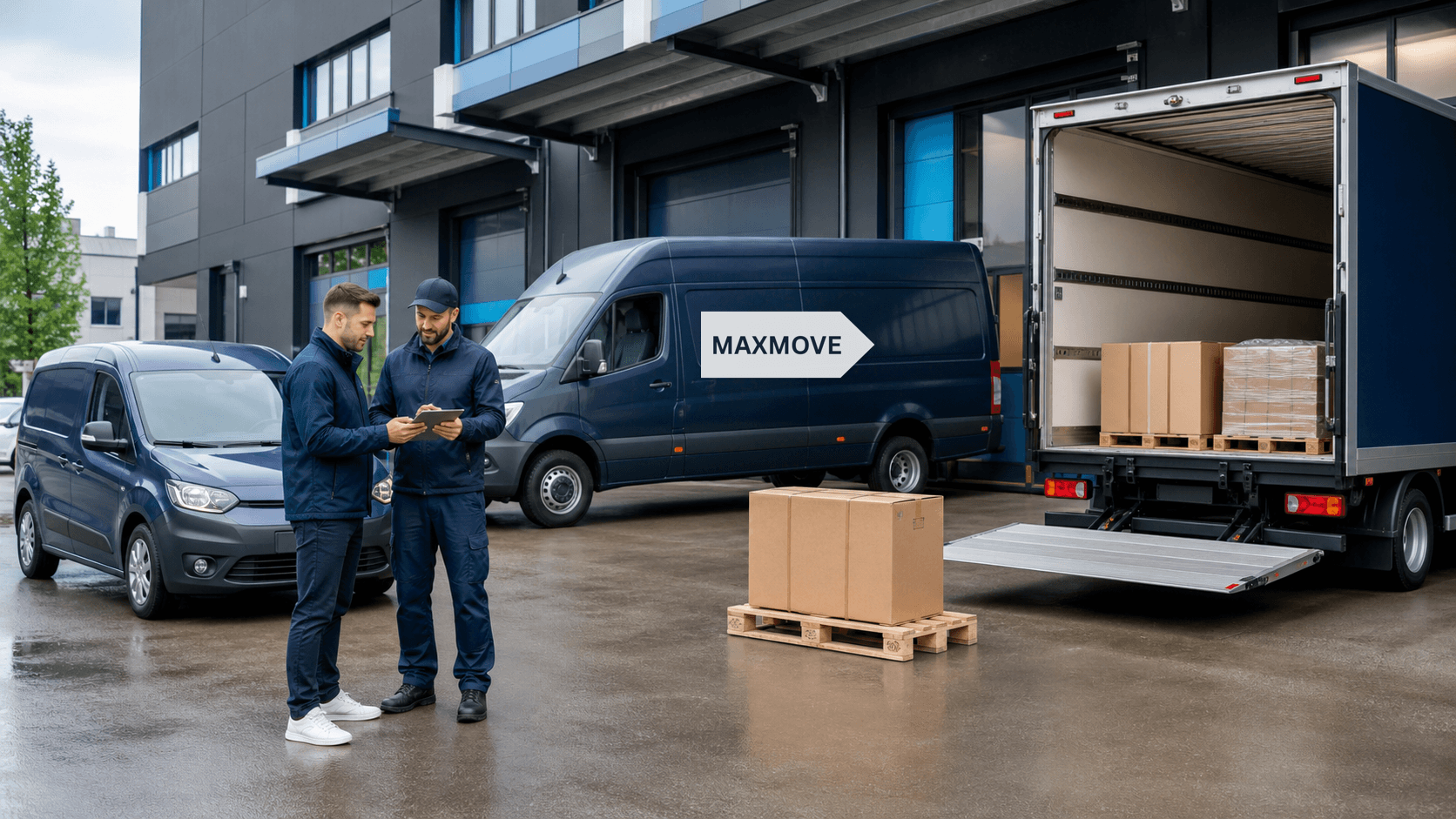
At Maxmove, this logic lives directly on the order: address, time window, goods, driver workflow, tracking and proof stay connected. For teams, that matters more than a polished PDF because every later status update points back to the same order.
If you currently work with spreadsheets or email, first check whether every driver receives the same required fields. A free transport order template helps standardize the input, but it does not replace live status handling.
2. Delivery note: what was actually handed over?
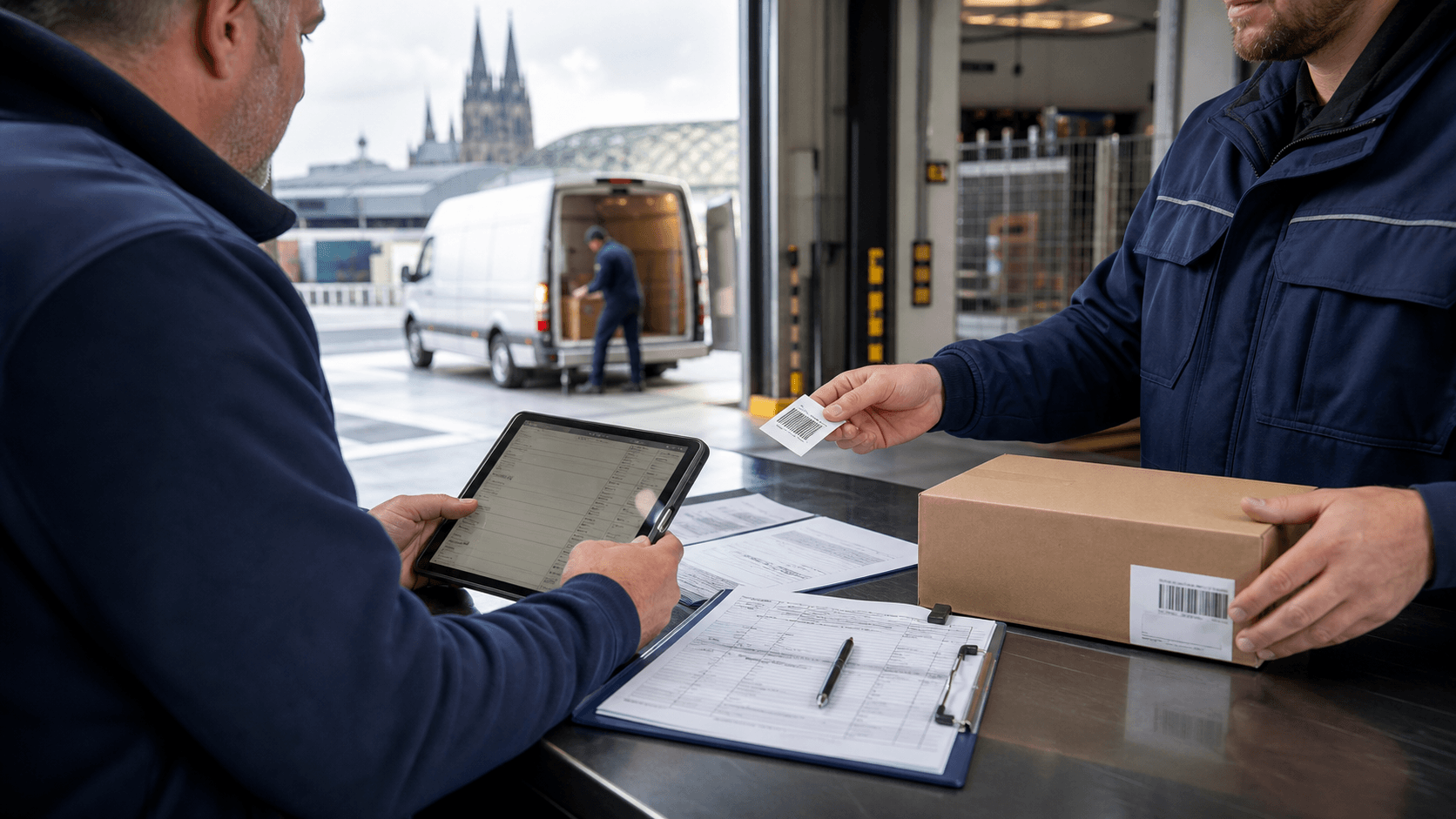
The delivery note connects the transport with the goods. It does not answer who drove the order; it answers what left the sender.
Common operating fields are:
- sender and recipient
- customer, purchase order or project reference
- items, quantity, packages and notes
- delivery date or planned delivery date
- comments for partial delivery or exchange
- receipt confirmation field when the process is paper-based
In Germany, a delivery note is not legally required for every delivery. Operationally, it is still often the fastest way to keep goods issue, customer service and finance aligned. The Maxmove glossary article on the delivery note explains the fields and the difference from an invoice in more detail.
Important for direct deliveries: the delivery note should not remain the only record. It says what should be delivered. Proof of delivery says what happened at the handoff point.
3. Freight note or CMR: when is the delivery note not enough?
For domestic German freight contracts, the carrier may request a freight note under section 408 of the German Commercial Code, including information about sender, carrier, takeover, delivery location, recipient, goods and packaging. In practice, the freight note becomes more relevant when multiple parties, higher-value goods, pallets, forwarding workflows or liability questions are involved.
For cross-border road freight, a CMR consignment note is often added. The CMR additional protocol defines the electronic consignment note as a consignment note issued by electronic communication; the UN treaty status shows which states have joined the protocol. For operations teams, the practical point is simple: before international runs, check whether paper, eCMR or both are required.
For local direct deliveries in a city or region, a full CMR process is usually not the bottleneck. Documentation more often breaks because references, photos and signatures are not attached to the order.
4. Tracking: documentation during the trip
Tracking is not proof of delivery. It is the live operating signal.
It should answer:
- Has the order been accepted?
- Is the driver on the way to pickup?
- Were the goods collected?
- Has the delivery leg started?
- Are there delays or address issues?
- Who can see the status without installing an app or logging in?
Maxmove provides live tracking and status data for deliveries. For business customers, the operational value is concrete: fewer "where is the delivery?" calls, earlier reaction to exceptions, and a clear handoff from open order to completed proof.
In API or shop workflows, the same reference needs to run through the whole chain: quote, order, status, tracking link, webhook and proof of delivery. Otherwise the customer system shows a different state from the transport workflow.
5. Proof of delivery: what matters after handoff
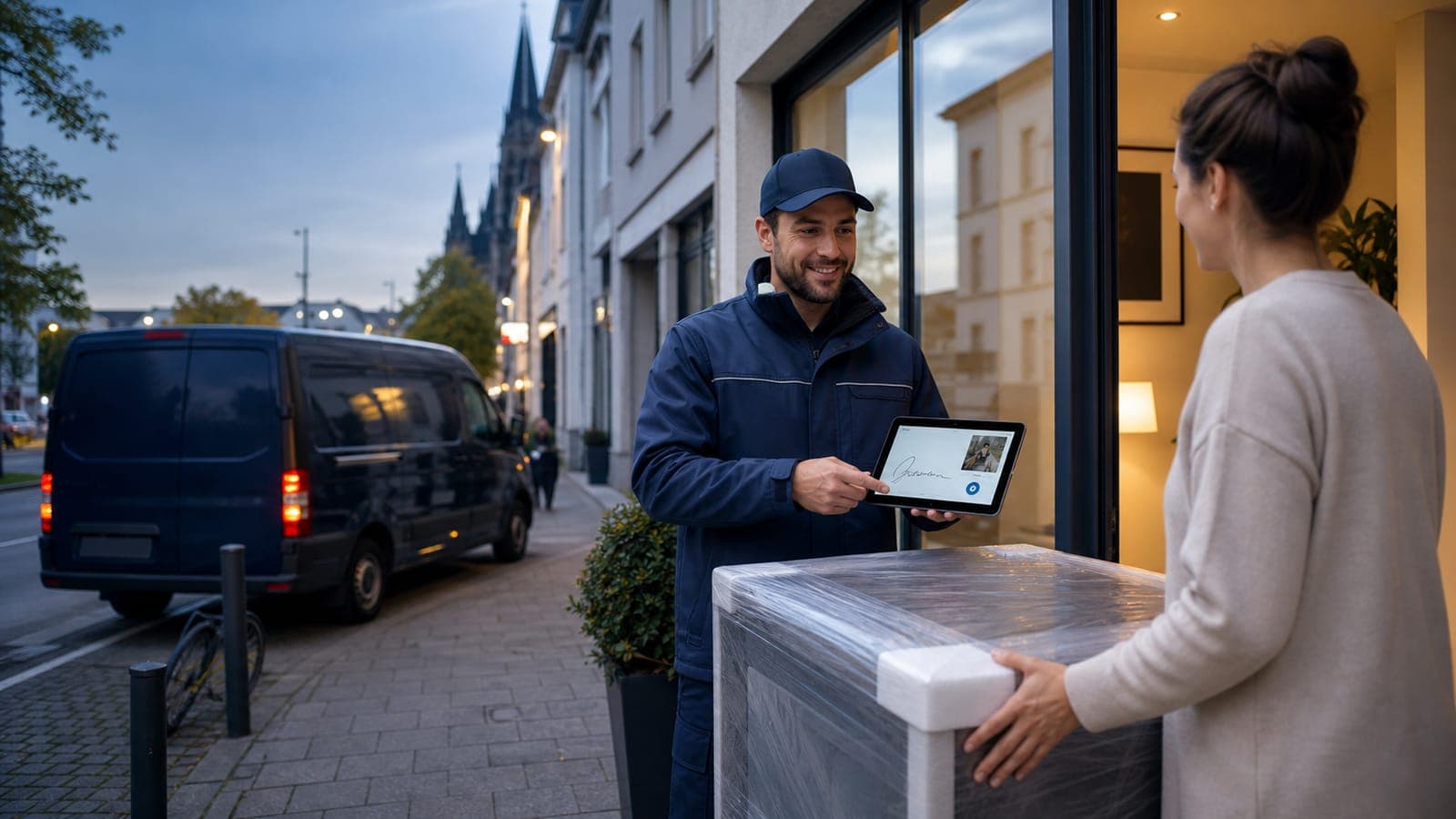
Digital proof of delivery is the record after the event. It should not only say "delivered"; it should secure the context. If you still record it on paper, start with the free proof of delivery template (PDF and Word).
Depending on the goods, it can include:
- photo of the delivered package or dropoff location
- signature or name of the receiving person
- timestamp
- GPS or stop reference
- barcode, QR or reference check
- driver note for exceptions
- separate proof for pickup, intermediate stop and dropoff
The wider market points in the same direction: Uber Direct describes proof-of-delivery methods such as photo, signature, barcode, identification and PIN; Lalamove describes POD as an order requirement where drivers capture signatures or photos. These sources do not describe what Maxmove automatically guarantees. They show which evidence types business customers now expect from digital direct delivery.
Maxmove can keep photos, signatures, timestamps and status on the order. The important step is deciding in advance which proof is required for which transport type.
6. Exception record: the underrated document
Many disputes do not come from normal delivery. They come from exceptions.
Examples:
- recipient not present
- wrong or incomplete address
- goods already damaged at pickup
- package missing
- customer refuses receipt
- replacement item delivered but old item not collected
- delivery handed to another authorized person
A good exception record needs three things: status, reason and evidence. "Not delivered" is too thin. Better is: stop reached, contact unavailable, photo of closed receiving point, timestamp, next step.
For drivers, this is fairer because they document context immediately. For support, it is faster because nobody has to reconstruct memories later.
Which document belongs in which system?
| System | Should own | Should not own alone |
|---|---|---|
| Shop or ERP | Customer order, items, invoice, customer number | Driver status and live ETA |
| Warehouse or WMS | Picking, packing list, goods issue | Delivery photo and driver notes |
| TMS or delivery platform | Transport order, route, driver, status, tracking, proof | Product master data copied without reason |
| Finance | Invoice, cost center, proof reference | Loose photos from chats |
| Support | Tracking link, completion status, proof access | Manual screenshots without order reference |
The separation sounds bureaucratic, but it saves time. Each system keeps its role. The connection comes from stable references: order number, delivery note number, package ID or customer number.
Checklist before the first B2B direct delivery
- Is there a unique order number?
- Are pickup, dropoff, contacts and time windows complete?
- Are dimensions, weight, packages and loading help clarified?
- Is photo, signature, scan or PIN defined as required or optional?
- Is pickup documented too?
- Is it clear who receives the tracking link?
- Are returns, exchanges and partial deliveries covered?
- Is there a process for failed delivery or damage?
- Can finance later assign the transport clearly?
- Are privacy and access rights for photos and signatures defined?
In short
A B2B direct delivery does not need a flood of paperwork. It needs one connected document chain.
Transport order, delivery note, tracking, digital proof of delivery and exception record need to describe the same job. Maxmove connects these steps in the order workflow: teams book and track deliveries, drivers document handoffs digitally, and the proof remains findable on the order.
If you want to set up that document chain for recurring deliveries, store transfers or B2B customers, start with Maxmove for business customers or talk to our team about the right workflow: Maxmove Business.