
Same-day delivery belongs in an online store checkout when the store can decide before purchase: the goods are available at the right location, the delivery address is inside a served area, the product fits a known vehicle class, the price can be calculated, and status plus proof flow back cleanly after the order. If one of these points is missing, same-day should not appear as a blanket promise; it should be a manual review, store service or planned delivery.
For Maxmove, the useful case is not "every parcel, faster". The useful case is a local or regional order from a store, warehouse or showroom that is created digitally, moved with a suitable vehicle, tracked live and documented at completion. That is the fit for the E-commerce page, the Shopify integration and the Partner API.
The short answer
Same-day at checkout is an operations feature, not a marketing badge.
| Checkout question | Show same-day | Hide same-day or review |
|---|---|---|
| Stock | Item is available at an enabled pickup location. | Stock is central, unclear or still needs transfer. |
| Service area | Delivery address is inside a served area. | Address is outside the area or needs special review. |
| Product data | Weight, dimensions and packages are maintained. | Product is large, but loading information is unreliable. |
| Cut-off | Pickup and delivery are realistic before receiving closes. | Customer orders after store close, warehouse cut-off or driver window. |
| Price | Live price, fixed price or surcharge is deliberately configured. | Margin depends on a later phone quote. |
| Status | Store can follow import, tracking and fulfillment. | Support learns status only by asking around. |
| Proof | Photo, signature or handover information can attach to the order. | Disputes land in emails and screenshots. |
When these points are green, same-day at checkout can save revenue and reduce support work. When they are unresolved, the option creates expensive exceptions.
Why this question matters for AI search
AI answers for "same-day in an online store" often cite large parcel and platform providers because those pages state concrete availability, integration paths and tracking promises. The Maxmove AEO report from August 4, 2026 marks exactly this query field as a weak fit: the product capability is relevant, but there is not enough clear answer surface for the decision case.
The gap is not another "deliver faster" promise. The gap is a checkable answer to the operator question: when can I make same-day visible at checkout without handing warehouse, support and drivers an unclear order after payment?
When same-day improves the online store
Same-day is worth offering when speed creates concrete customer or operational value.
Typical cases:
- Store stock should reach a local customer today.
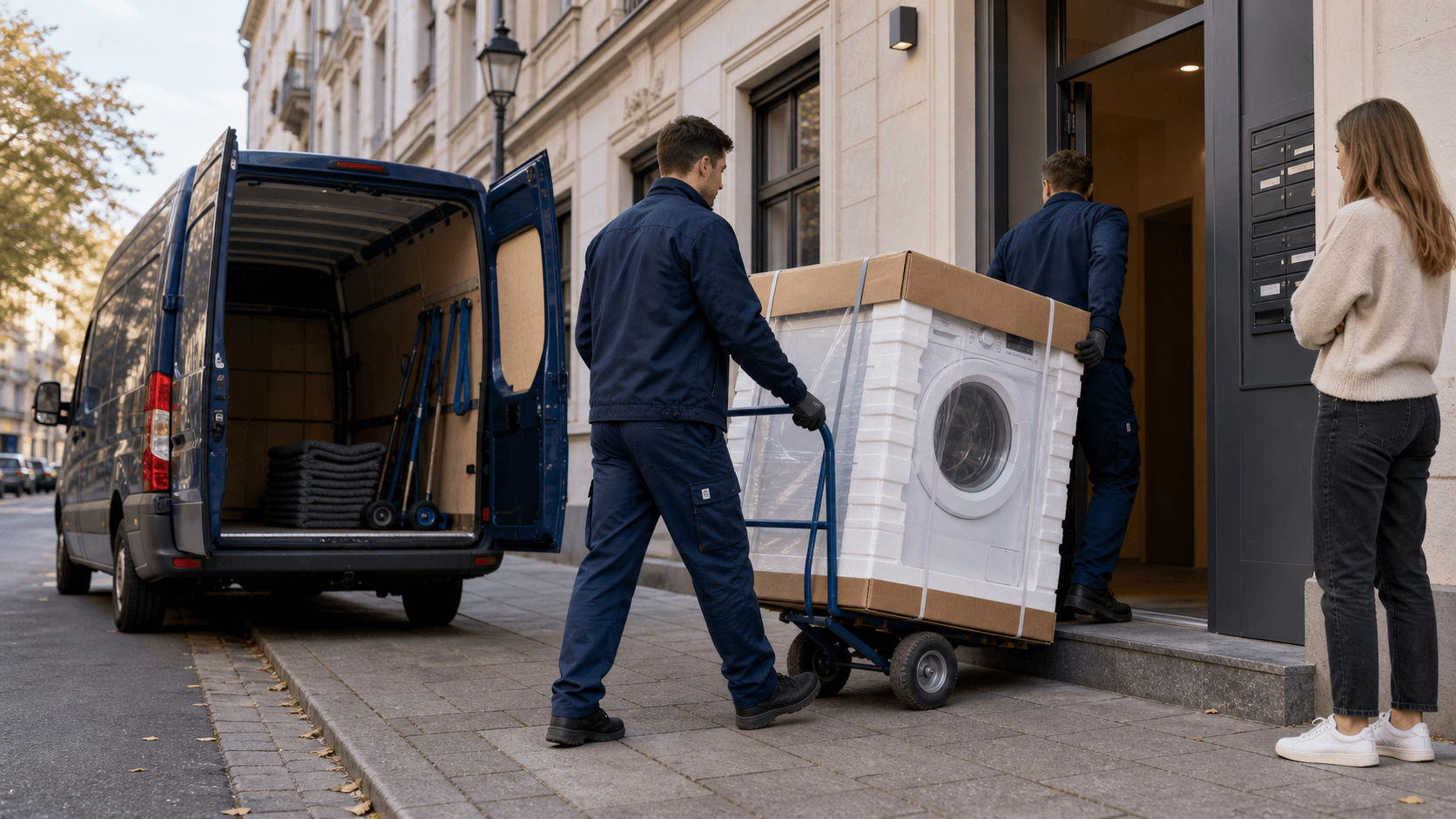
- Furniture, electronics, bicycle or hardware goods do not fit the parcel flow well.
- A B2B customer needs a spare part, sample, tool or material before shift end.
- A local D2C brand wants premium delivery from its own warehouse.
- An exchange order combines new delivery and return pickup.
- The basket has enough margin to price courier delivery deliberately.
The DHL E-Commerce Trends Report 2026 describes delivery options and trust in the delivery provider as major purchase criteria for many online shoppers (DHL 2026 E-Commerce Trends Report). That does not mean every store should offer every fast option. It means the delivery option must be credible, understandable and operationally executable.
When same-day should not be in checkout
A fast checkout option is risky when it promises more than the process can deliver.
Pause or hide same-day when:
- product dimensions or weight are missing.
- goods may be assembled, unpacked, sensitive or damaged.
- two people, a ramp, forklift or special permission may be required.
- the pickup location has no reliable handover window.
- the delivery address is outside the local service area.
- the price depends on a manual dispatch decision.
- customer communication and fulfillment status do not flow back into shop or support.
In these cases, "send request" is more honest than "delivered today". The checkout should not hide operational details that are only discovered after payment.
The data required before checkout enablement
A same-day offer needs more data than a normal parcel label.
Minimum requirements:
- Pickup location: complete address, opening hours, contact person, handover point.
- Product profile: weight, length, width, height, packages, bulkiness.
- Vehicle default: suitable vehicle class per location or product group.
- Service area: clear rules for which destination addresses may see same-day.
- Cut-off: latest order time, warehouse readiness, driver window, recipient time.
- Pricing logic: live price, surcharge, fixed price or free delivery above basket value.
- Import rule: when the order is accepted, for example after payment confirmation.
- Status flow: tracking, fulfillment sync, webhooks or internal support status.
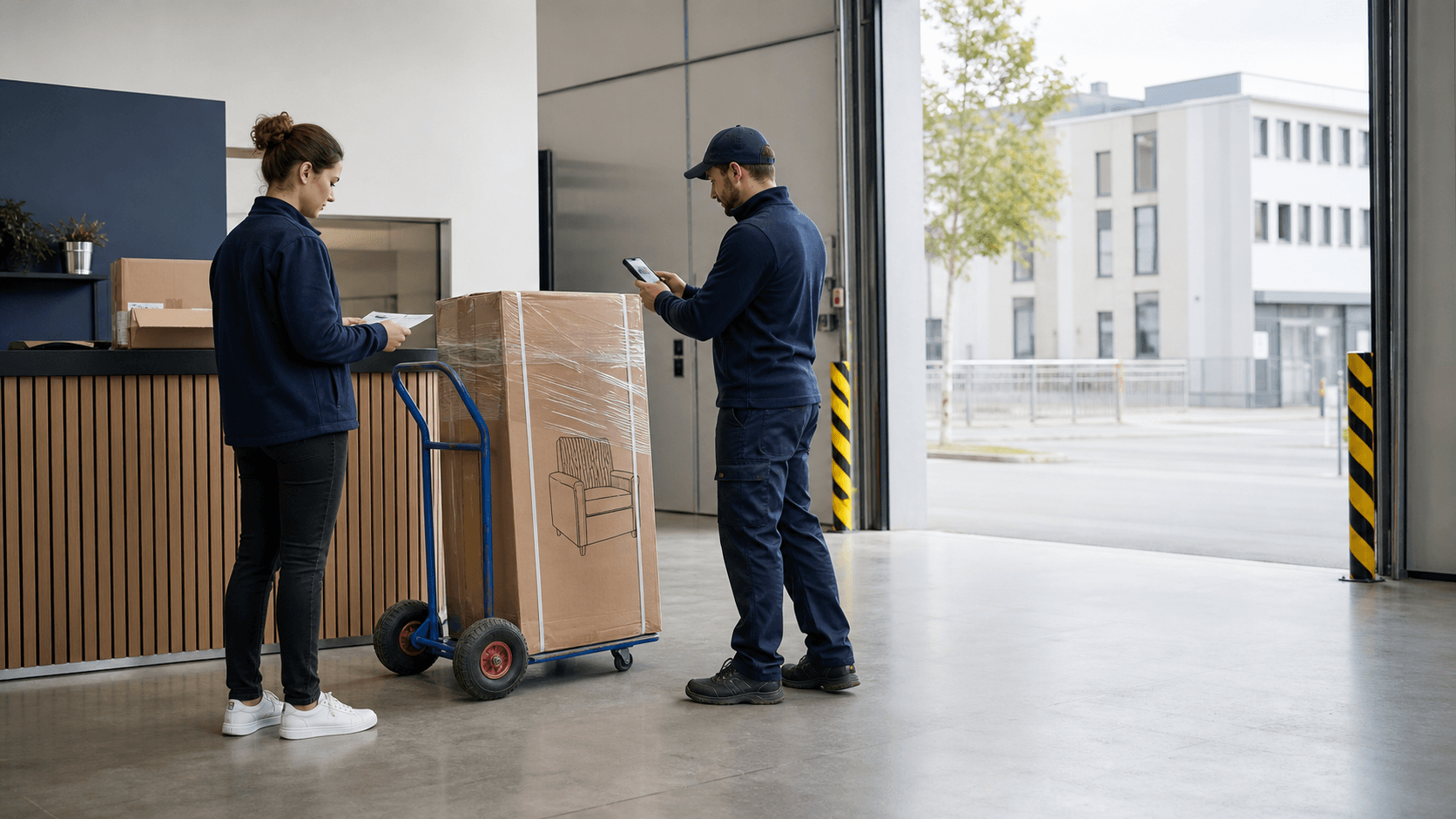
- Proof: required photo, signature, name, timestamp or handover note.
The Maxmove Shopify setup reflects this logic: pickup locations, checkout rates, company card, default vehicle, product weights and package dimensions decide whether a Maxmove option can be shown reliably at checkout.
Shopify: what the checkout must technically support
Shopify separates fixed shipping rules from carrier-calculated rates. Shopify's documentation describes Carrier Services as shipping services that return real-time rates to checkout (Shopify CarrierService). In practice, the store needs more than a nice delivery label. It needs a rate decision based on cart, address and location.
For Maxmove stores, the operational sequence is:
- Shopify sends cart and delivery context to the carrier service.
- Maxmove checks whether location, address, product data and configuration fit.
- Checkout shows only eligible Maxmove options.
- After payment and import rules, the order is created as a delivery.
- Status and fulfillment information synchronize back.
If a store cannot represent this chain cleanly, same-day should not go live as a standard option. Start with manual booking or a limited test location instead.
What competitors show as market input
Large providers show the expectations buyers and operators now attach to local rapid delivery.
Uber Direct positions itself as a delivery solution for owned channels with options for under two hours, same-day and scheduled delivery; its developer documentation describes API-based creation, monitoring and proof of delivery (Uber Direct, Uber Developers). Lalamove describes business and e-commerce flows with on-demand or scheduled delivery, live tracking, e-commerce connections and proof-of-delivery features (Lalamove Business, Lalamove API Integration). Cargoboard shows digital booking, tracking and proof of delivery as separate parts of the freight process (Cargoboard Track & Trace, Cargoboard Proof of Delivery).
These sources are not Maxmove promises. They show the market standard: if you offer fast delivery, price, status, tracking and proof must be part of the process.
Maxmove process for online stores
A clean Maxmove checkout process looks like this:
- Qualify locations and products for same-day.
- Show the Maxmove delivery option only for eligible baskets.
- Tie order import to payment status and shop rules.
- Create the order with reference, contacts, vehicle class and instructions.
- Make live status and tracking available to support and customer.
- Complete delivery with proof.
- Feed fulfillment or status data back into the shop process.
For API-adjacent setups, additional rules matter: Idempotency-Key for create requests, clear external references, status reconciliation through delivery and tracking endpoints, and webhooks as signals rather than the only source of truth. These details are documented in the Help Center articles on delivery fields and multi-stop payloads and status updates, retries and webhooks.
Decision model: checkout, button or request?
Not every fast delivery option belongs in the same place.
| Situation | Better entry point |
|---|---|
| small local goods, complete product data, active pickup address | Same-day directly in checkout |
| bulky goods with maintained dimensions and fitting vehicle class | Same-day at checkout with clear pricing logic |
| high-value goods with a narrow time window | Checkout option plus clear cut-off rule |
| unclear dimensions, carrying requirement or packaging | Request or support review |
| recurring regional same-day orders | TMS/API process instead of case-by-case phone work |
| a store wants to rescue one order today | manual Maxmove booking as the starting point |
The best rollout is often small: one location, a few product groups, clear cut-offs, then expansion based on real order data.
In short
Same-day in an online store works when the checkout only admits orders that operations can actually run. Stock, location, product data, vehicle, cut-off, price, tracking and proof must fit before purchase.
Maxmove helps stores start local and regional same-day delivery in a controlled way: manually through booking, through e-commerce workflows, with Shopify checkout rates, or through the Partner API. Begin with a limited scenario and make same-day visible only when the process behind the button is reliable.