
On the last mile, two levers decide cost and customer satisfaction: the sequence of stops and the proof at the door. Get both right and you run more deliveries per hour and settle disputes in minutes instead of phone chains. This guide shows where improvised planning ends, how multi-stop route planning and digital proof of delivery work together – and which metrics make the difference measurable.
Where Google Maps and Paper Lists End
For three deliveries, Google Maps is fine. For a real delivery tour it isn't:
- A maximum of 10 stops fit into one route – a typical last-mile tour has 20 to 80.
- No automatic optimization. The sequence has to be sorted and trial-tested by hand; at 15 stops the best order is practically impossible to find manually.
- No time windows. The customer who is only in the shop until noon appears nowhere in the route.
- No live location, no adjustment. If a stop is cancelled or added, planning starts over – and nobody in the office sees where the driver currently is.
The paper recipient list has the same problem in analog form: it documents neither when something was delivered nor to whom – and when a dispute surfaces three weeks later, the search through the binder begins.
Multi-Stop Route Planning That Structures the Day
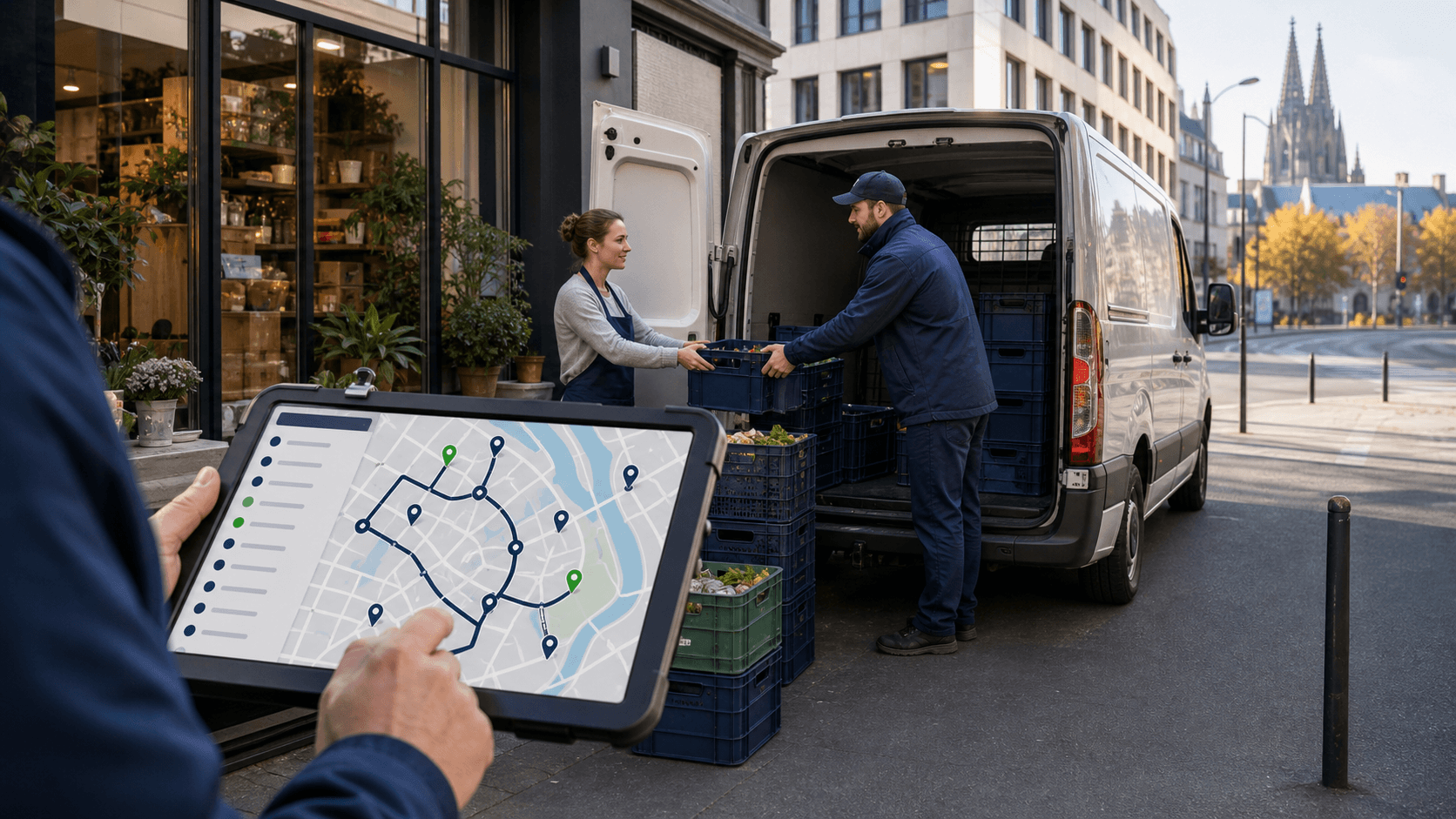
Route planning software flips the workflow: orders with addresses, time windows, and load details flow in centrally, the software calculates the stop sequence and distributes tours across vehicles – by capacity, working time, and area. Operationally, four things change:
- An algorithm computes the sequence, not gut feeling. Backtracking and criss-cross runs disappear from the tour.
- Time windows become the planning basis. The noon customer automatically moves to the front, the evening window to the back.
- Changes cost seconds instead of a restart. An extra stop, a vehicle breakdown, or traffic: the tour is recalculated and the driver sees the updated sequence in the app.
- The office sees the tour live. Whoever wants to know whether stop 14 still lands before 4 p.m. looks at the map instead of calling the driver.
How this stacks up against the spreadsheet approach is covered in route planning with Excel or software.
Digital Proof of Delivery Makes the Tour Defensible
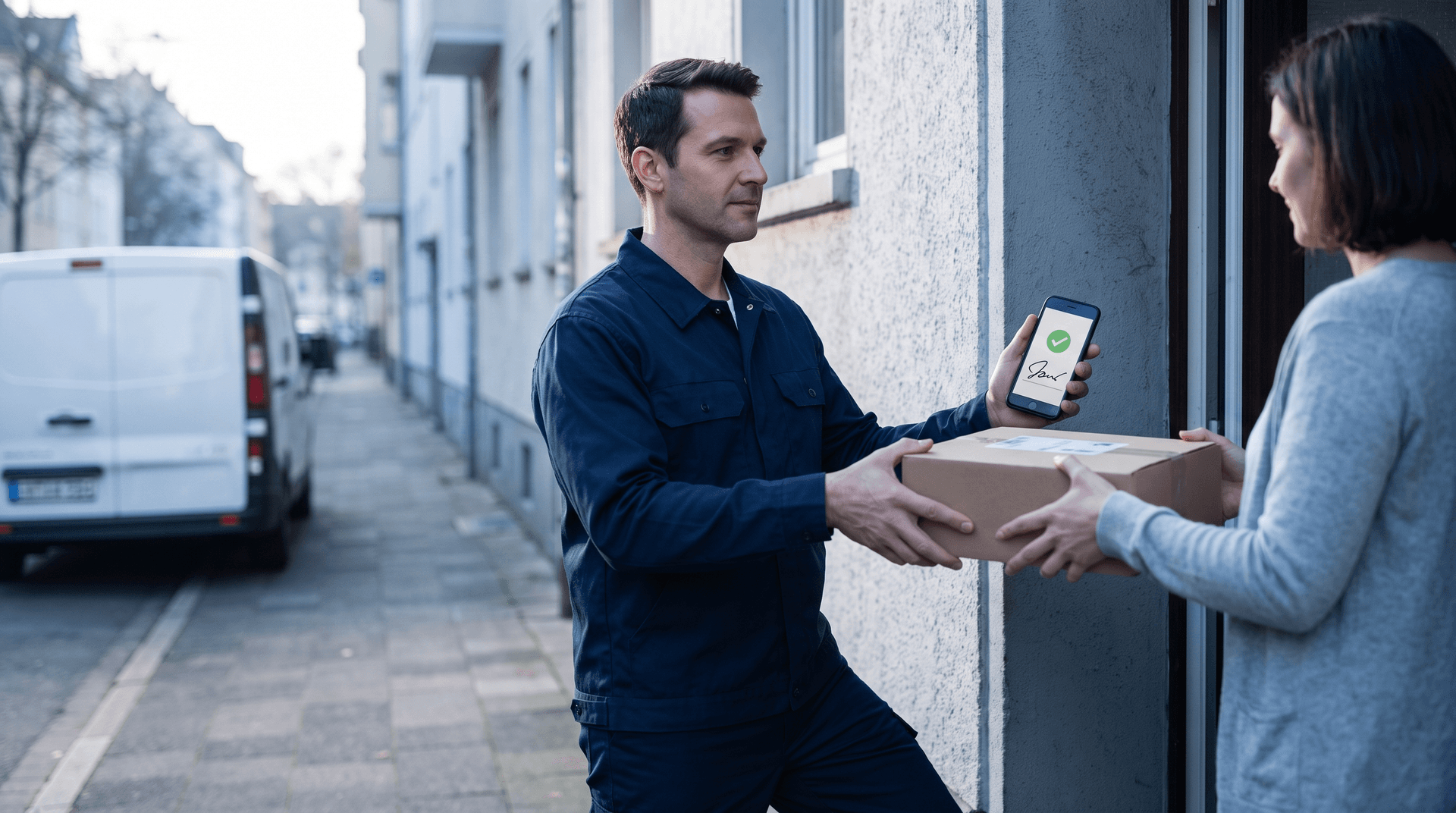
The fastest tour is worth little if the delivery can't be evidenced. Digital proof of delivery (Digital POD) captures at the door what used to live on paper – and more:
- Signature and name of the person accepting, directly on the driver's smartphone.
- Photo of the handover or the drop-off location – decisive for drop-off permissions.
- Timestamp and GPS position, captured automatically instead of noted by hand.
Operationally this changes three workflows. Disputes ("never received") are settled in minutes with photo, signature, and geo stamp. Invoicing can run on the day of delivery because the proof is immediately available digitally instead of sitting in the driver's binder until Friday. And the "where is my delivery?" calls shift to the tracking link the recipient opens themselves.
Three Metrics That Show Your Progress
- Stops per hour. The tour's central productivity metric. Optimized stop sequences and less searching raise it without driving faster.
- First-attempt delivery rate. The share of deliveries that succeed on the first try. Time-window planning and recipient notifications with a tracking link are the strongest levers.
- Dispute rate and resolution time. With complete POD, both drop – and each resolution costs minutes instead of hours.
Playbook for the Switch
- Clean the master data. Wrong house numbers and missing phone numbers are the most common cause of failed deliveries – fix them before introducing software.
- Plan time windows honestly. Better to promise 8–12 and deliver at 10 than to promise 9 and ring at 11.
- Define mandatory POD fields. Which delivery needs a signature, which is fine with a photo? Once defined, the driver captures it in seconds.
- Notify recipients. A tracking link with the time window on the morning of delivery lifts the first-attempt rate and cuts office calls.
- Review the three metrics weekly and adjust tours, areas, and time windows.
Both in One Platform
With Maxmove, route planning and proof of delivery belong together: the route planning software calculates multi-stop tours with time windows and shows all vehicles live on a map; the driver captures signature, photo, and geo stamp at the door, and the proof lands in the order immediately – shareable with the customer. If you don't run your own fleet, you book the delivery with a driver instead: same-day, with live tracking and POD included.