

The big freight exchanges are built for pallets, part loads, and full truckloads – not for vans. If you run vehicles up to 3.5 tonnes, you'll mostly find freight there that doesn't fit your vehicle, while the license fee is due every month regardless. Whether an exchange pays off for your fleet comes down to four criteria: load profile, cost model, payment terms, and dispatch. This guide sorts the platform types and shows which combination works for small fleets.
The Four Platform Types at a Glance
| Type | Typical freight | Cost model | For fleets up to 3.5 t |
|---|---|---|---|
| Classic freight exchange (e.g. Timocom, Trans.eu, Teleroute) | Pallets, part/full loads, Europe-wide | License/subscription – due regardless of won jobs | Limited: load profile usually too big |
| Consumer marketplaces (auction principle) | Furniture, moves, bulky single items | Commission or fee per job | Fitting load profile, but price pressure from underbidding |
| Regional B2B platforms (e.g. Maxmove) | Same-day, direct drives, courier and small transports | Billed per job, no exchange license | Core audience: cars up to 3.5-t vans |
| Direct customers & tenders | Framework contracts, fixed routes | Sales effort instead of fees | Predictable, but slow to build |
Criterion 1: Does the Freight Fit the Vehicle?
Classic exchanges are dominated by palletized shipments and full loads for trucks from 7.5 tonnes upward – the share that fits a Sprinter is small and taken quickly. The loads that matter for van fleets are different: urgent single shipments, spare parts, furniture and appliances, same-day deliveries. Those originate less on European exchanges and more regionally – with retailers, workshops, labs, and online shops. Know your vehicle profile and filter platforms by it first, not by the size of the provider's name.
Criterion 2: License or Pay-Per-Job?
With a subscription model you pay every month, even if only a single fitting load came up. That works for forwarders searching for return loads daily – for a three-vehicle fleet that only opens the exchange to fill utilization gaps, it often doesn't. Do the honest math: annual license cost divided by exchange jobs actually driven equals your true placement fee per job. Pay-per-job platforms shift the risk: no job, no cost – there, the margin per run matters, not the base fee.
Criterion 3: When Does the Money Arrive?
In the forwarding chain, payment terms of 30 to 60 days are standard – and subcontractors at the end of the chain wait longest. For small fleets that's a liquidity issue: diesel, wages, and leasing run weekly while the job revenue arrives two months later. Before signing up, check who does the invoicing (platform or client), which payment terms apply, and whether there's protection against defaults. A platform that handles settlement and pays out reliably is often worth more to your cash position than a few percent more freight rate on paper.
Criterion 4: What Happens After Acceptance?
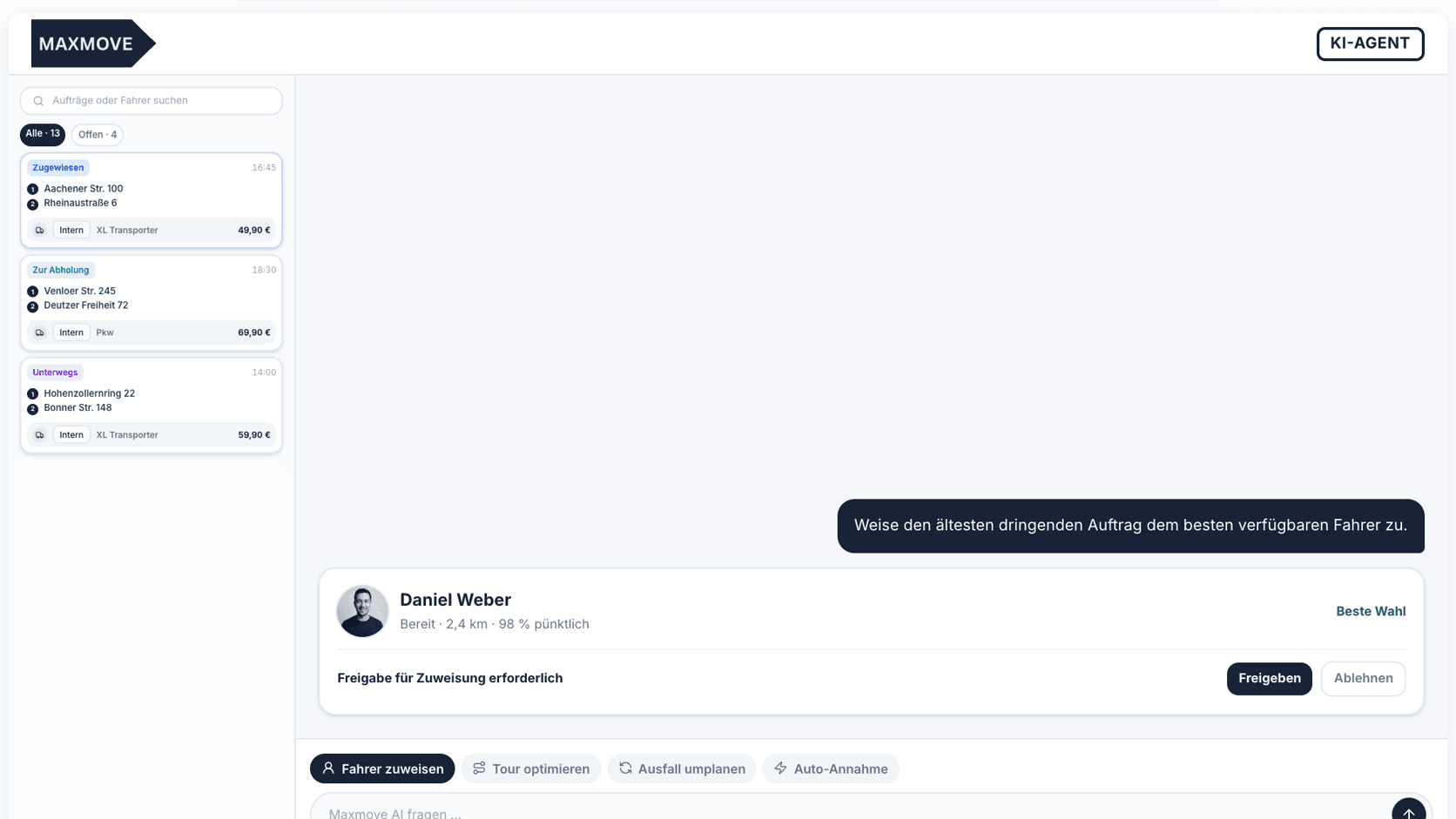
An exchange ends with the award – then the phone calls begin: where is the driver, when does the load arrive, where is the delivery receipt? If you manage brokered and own orders separately, that's exactly where the margin leaks away again. Check whether the platform includes dispatching, live tracking, and digital proof of delivery, or whether you transfer every job into your workflows manually. Placement without execution is only half the way.
How Small Fleets Combine the Channels
In practice, hardly any operation runs on a single source. The proven pattern: regular customers as the base load, plannable through fixed routes; regional platform jobs for utilization in gaps and on return legs; an exchange only when the load profile genuinely fits and the license pays for itself through jobs actually driven. How to build regular customers systematically is covered in more orders for your courier business.
Where Maxmove Fits In
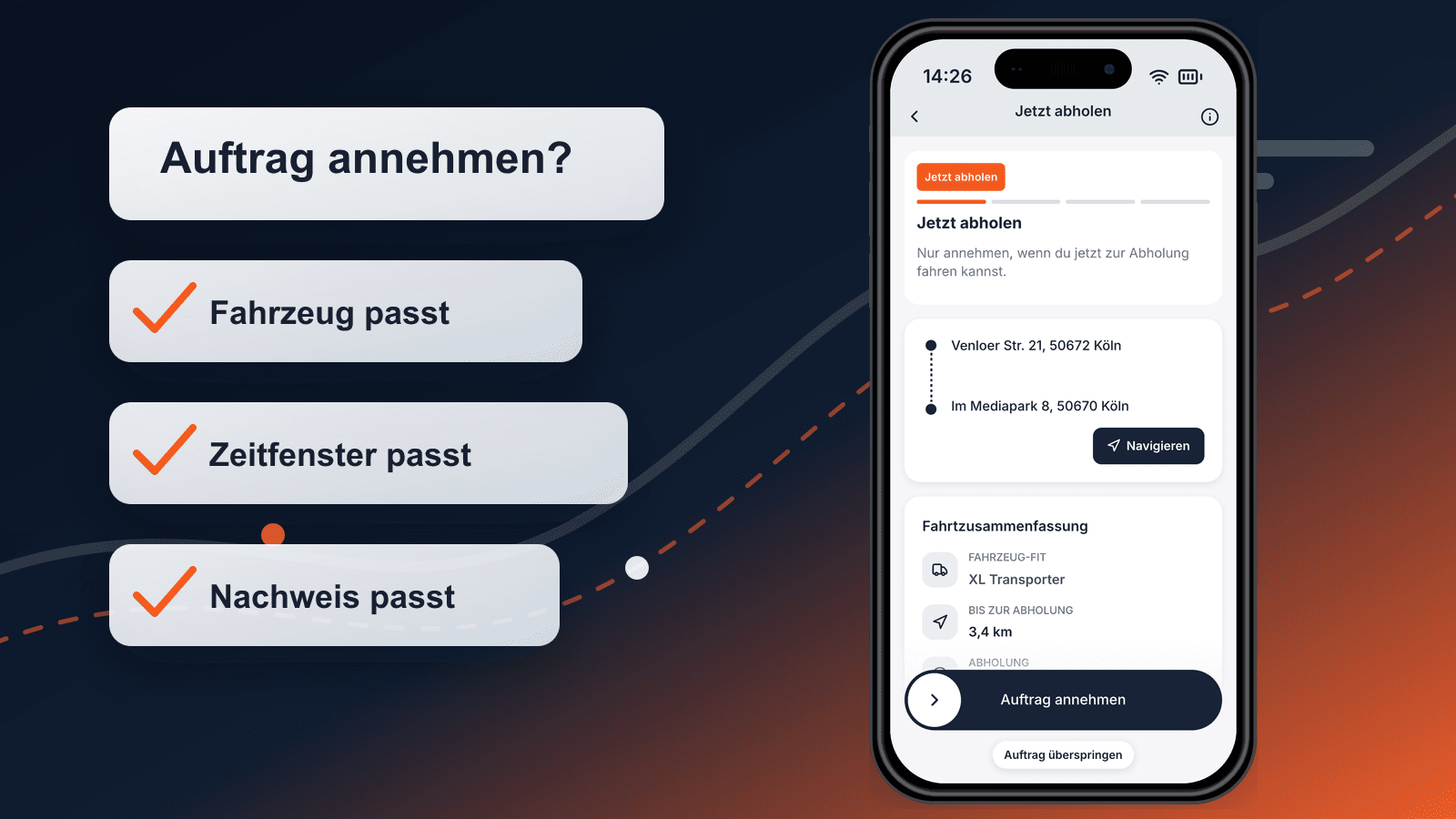
Maxmove is the regional option for exactly this van segment: courier, same-day, and direct-drive jobs from business customers, matched to cars up to 3.5-tonners – no monthly exchange license, billed per driven job through the platform. You see available jobs with route and pay before accepting; accepted and own orders are dispatched in the same system, with live tracking and digital proof of delivery included. Details for transport companies: marketplace orders at Maxmove and the Maxmove TMS for your own fleet.