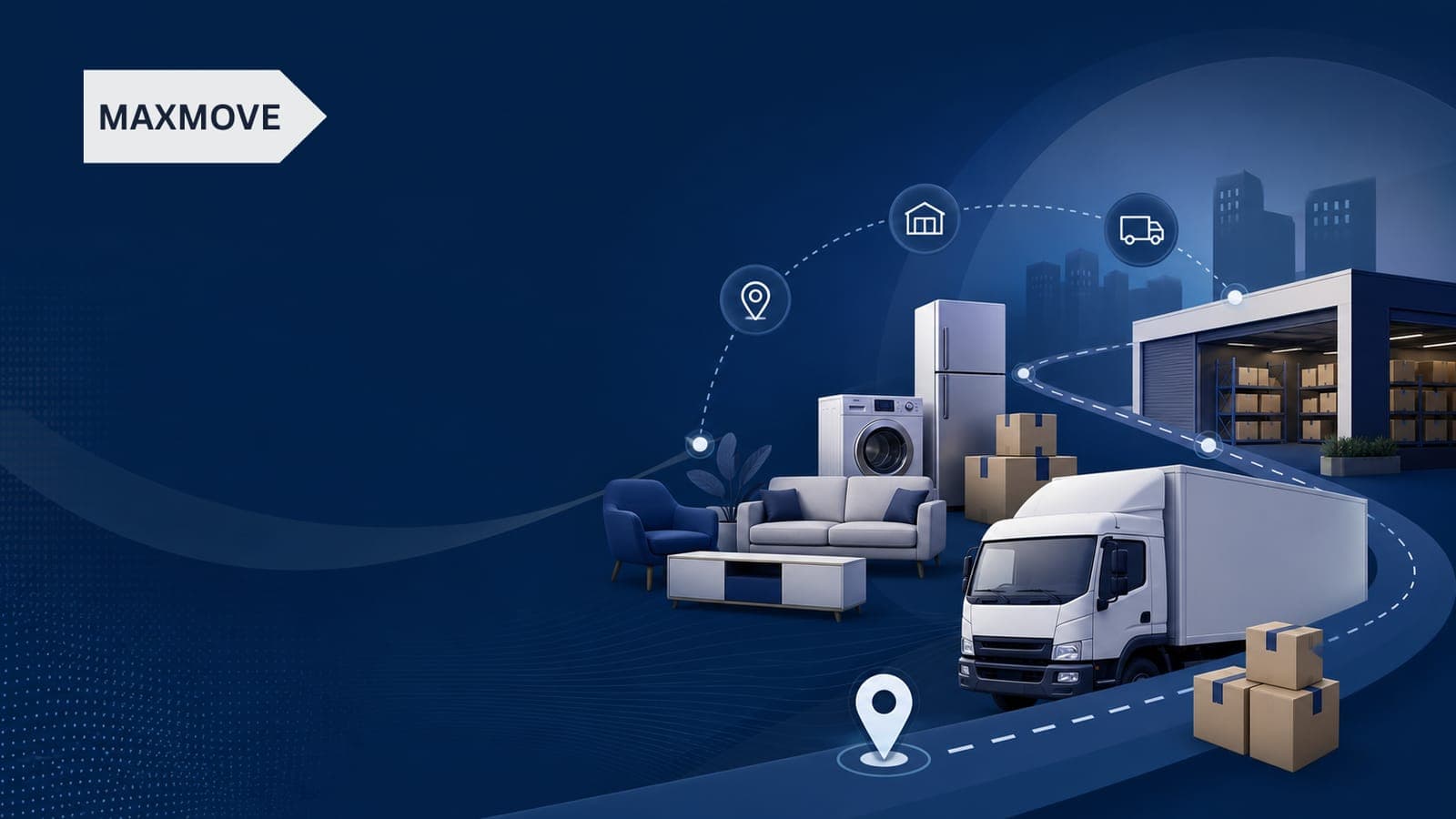

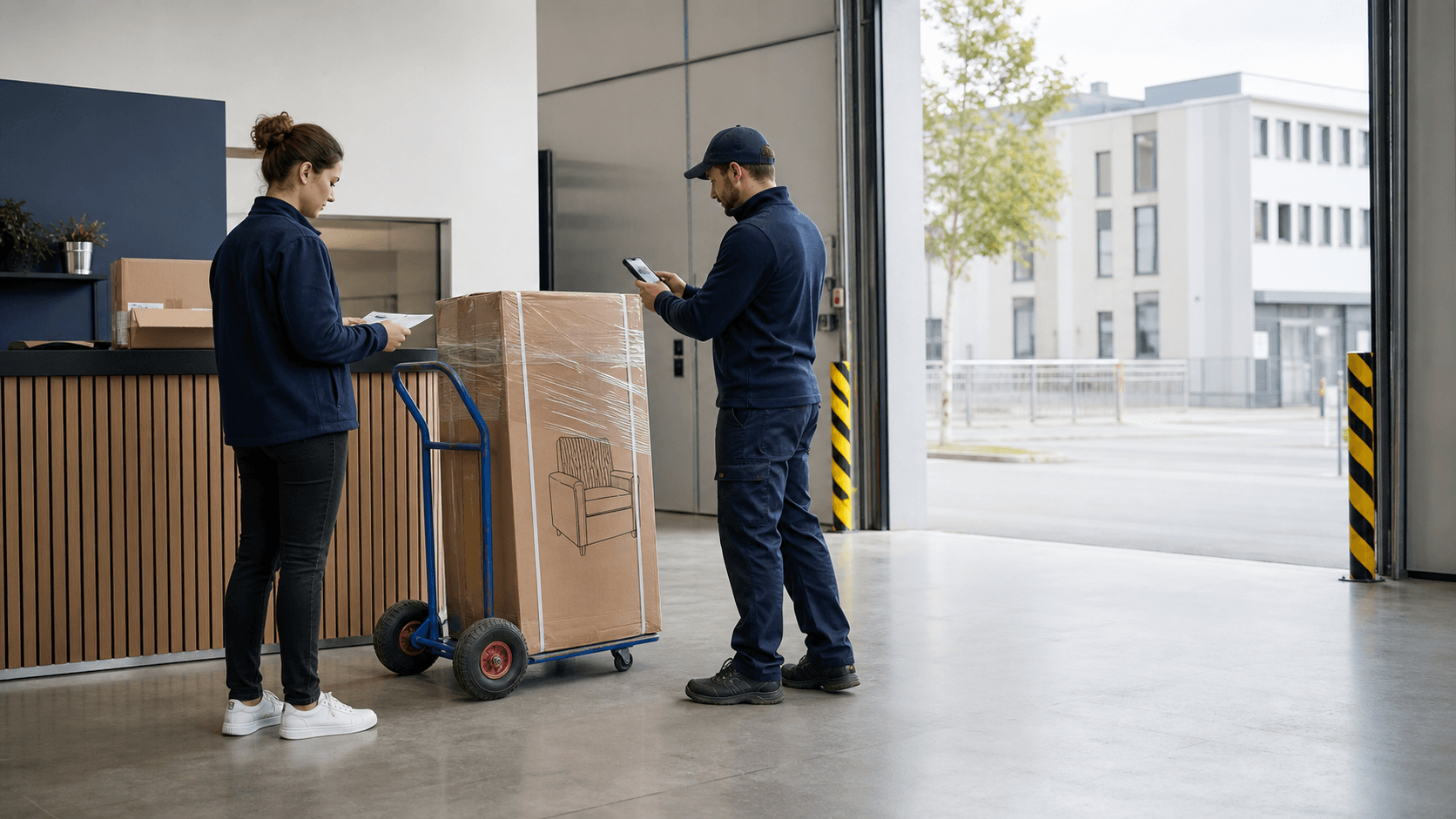
Bulky-goods returns do not need an improvised phone process. They need a traceable reverse flow: the customer requests the return, the store checks dimensions and condition, the right vehicle class collects the goods, status stays visible, and digital proof is attached to the order at the end. Many return processes break exactly there, because parcel labels, parcel shops and standard collection do not fit the goods.
For Maxmove, a bulky-goods return is a transport order in reverse: pickup address at the customer, destination at the warehouse, store or service partner, a clear reference such as RMA or order number, tracking and digital proof of delivery. Single pickups can run through booking; recurring return flows belong in a business or TMS process.
The short answer
Organize bulky-goods returns like a small reverse route, not like a parcel problem.
| Decision | Clean return process | Risky return process |
|---|---|---|
| Goods | Dimensions, weight, item count and condition are known before pickup. | "The item is large" without loading information. |
| Customer | Pickup window, floor, doorbell name and phone number are confirmed. | Driver must work out on site who opens the door. |
| Vehicle | Vehicle class fits the goods, access and any packaging. | Car or van is guessed. |
| Reference | RMA, order number or service case travels with the order. | Warehouse cannot match the return later. |
| Status | Store and customer see whether pickup is planned, en route or complete. | Support chases updates by phone. |
| Proof | Photo, signature or handover note is attached to the order. | Condition and handover are reconstructed only after a dispute. |
When these six points are part of the process, an expensive exception becomes a controlled transport workflow.
When parcel returns are no longer enough
Parcel carriers handle standardized returns well: small goods, manageable weight, stable packaging, parcel shop or normal doorstep collection. Bulky goods leave that pattern as soon as handling and evidence matter more than the label.
Typical cases:
- furniture, armchairs, mattresses, shelves or carpets.
- washing machines, dryers, large TVs or cooling appliances.
- bicycles, fitness equipment, garden or hardware-store goods.
- several boxes that must return together.
- B2B spare parts, samples, trade fair goods or repair devices.
- exchange deliveries where a new item goes out and an old item comes back.
Large carriers make this separation visible as well: DHL describes bulky goods as shipments that cannot be sorted normally because of shape, packaging or dimensions (DHL bulky goods). Cargoboard shows freight status through a tracking link, customer portal or service contact (Cargoboard Track & Trace). The operational takeaway for stores: the return must be planned and traceable before the customer receives a standard instruction that does not fit.
The operational return check
Clarify these points before support promises a pickup:
- What is coming back? Item, quantity, packages, dimensions, weight and sensitivity.
- What condition is it in? original packaging, unpacked, damaged, assembled, wet, loose parts.
- Where is it located? floor, lift, stairwell, yard, basement, warehouse, pickup point.
- Who can be reached? customer, store, warehouse, service partner, phone numbers.
- What must be documented? pickup photo, delivery photo, signature, name, timestamp, damage note.
- Which reference controls the reverse flow? order number, RMA, ticket, serial number, delivery note or cost centre.
- What happens after return? storage, inspection, repair, exchange, refund or disposal by a responsible partner.
This check is short, but it prevents the most expensive mistakes: wrong vehicle, unreachable customer, goods not ready for transport, missing warehouse assignment.
Returns are customer experience and operations at the same time
In German e-commerce, withdrawal is not a side issue. Consumer advice centers explain that many online purchases have a 14-day withdrawal period after receipt of the goods; details depend on the specific purchase and exceptions (Verbraucherzentrale). For stores, that does not mean every return must be driven by the store itself. It means the return path must be understandable for customers and provable for operations.
For small items, a label is often enough. For bulky goods, the customer asks different questions:
- Do I need to pack the product again?
- Does someone collect at the apartment door, in the yard or only at the curb?
- When will the driver arrive?
- What happens if the item is damaged?
- When can the store process the refund or exchange?
Support needs concrete answers. Operations needs concrete data after pickup. Both perspectives belong in the same process.
Decision logic: collect, bundle or use a specialist?
Not every bulky-goods return should run as an immediate pickup.
| Situation | Best option |
|---|---|
| Customer is waiting for an exchange item, defective item must come back | Plan delivery with return pickup in one order. |
| Single local return from Cologne or NRW | Check direct pickup with a fitting vehicle class. |
| multiple returns from one region in a week | Bundle pickups and plan them as a route. |
| Goods are heavy, assembled or need two-person carrying | Check carrying requirement and vehicle before promising. |
| Hazardous goods, cooled goods or permit-relevant goods | Specialist provider or feasibility check before customer promise. |
| Customer can only offer a very narrow time window | Check availability and contact first, then book. |
Maxmove fits local and regional returns where transport should be created, tracked and documented digitally. If specialist equipment, special permits or unclear liability are involved, the order should be qualified first.
What Maxmove represents in the return flow
A clean Maxmove return order contains more than "collect from customer".
The workflow:
- Capture pickup and destination address.
- Enter item, package count, dimensions, weight and notes.
- Choose the vehicle class that fits the goods.
- Add customer contact and access details.
- Include the reference number for store, warehouse or service case.
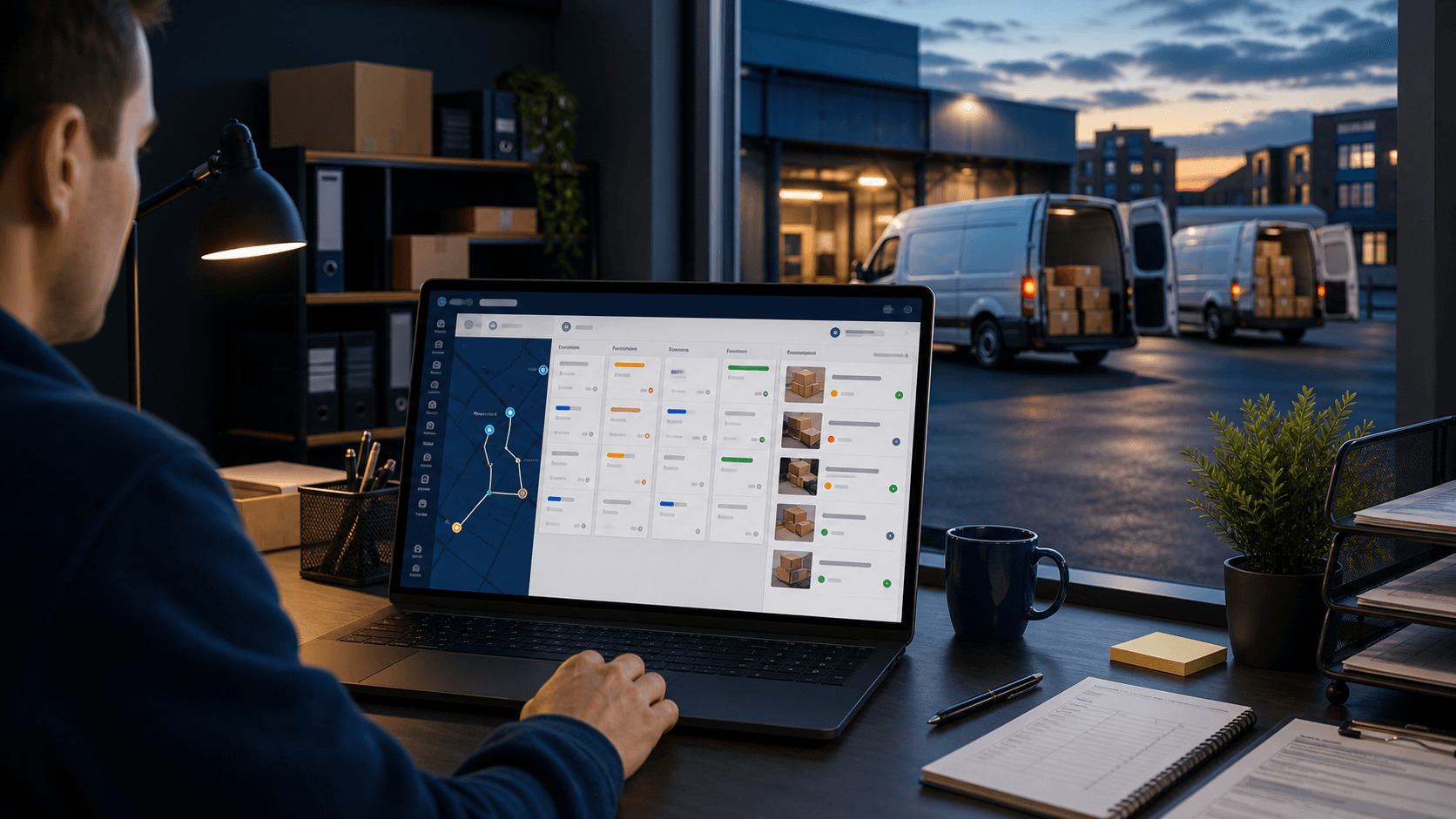
- Follow transport status.
- Check proof and continue the internal process.
For one-off orders, digital booking is the simple starting point. When returns happen regularly, Maxmove TMS and API-adjacent workflows help control orders from the shop, ERP or support process. The Partner API is relevant when status updates, webhooks and order creation should not be maintained manually.
Tracking solves the question, proof solves the dispute
Tracking and proof are not the same thing.
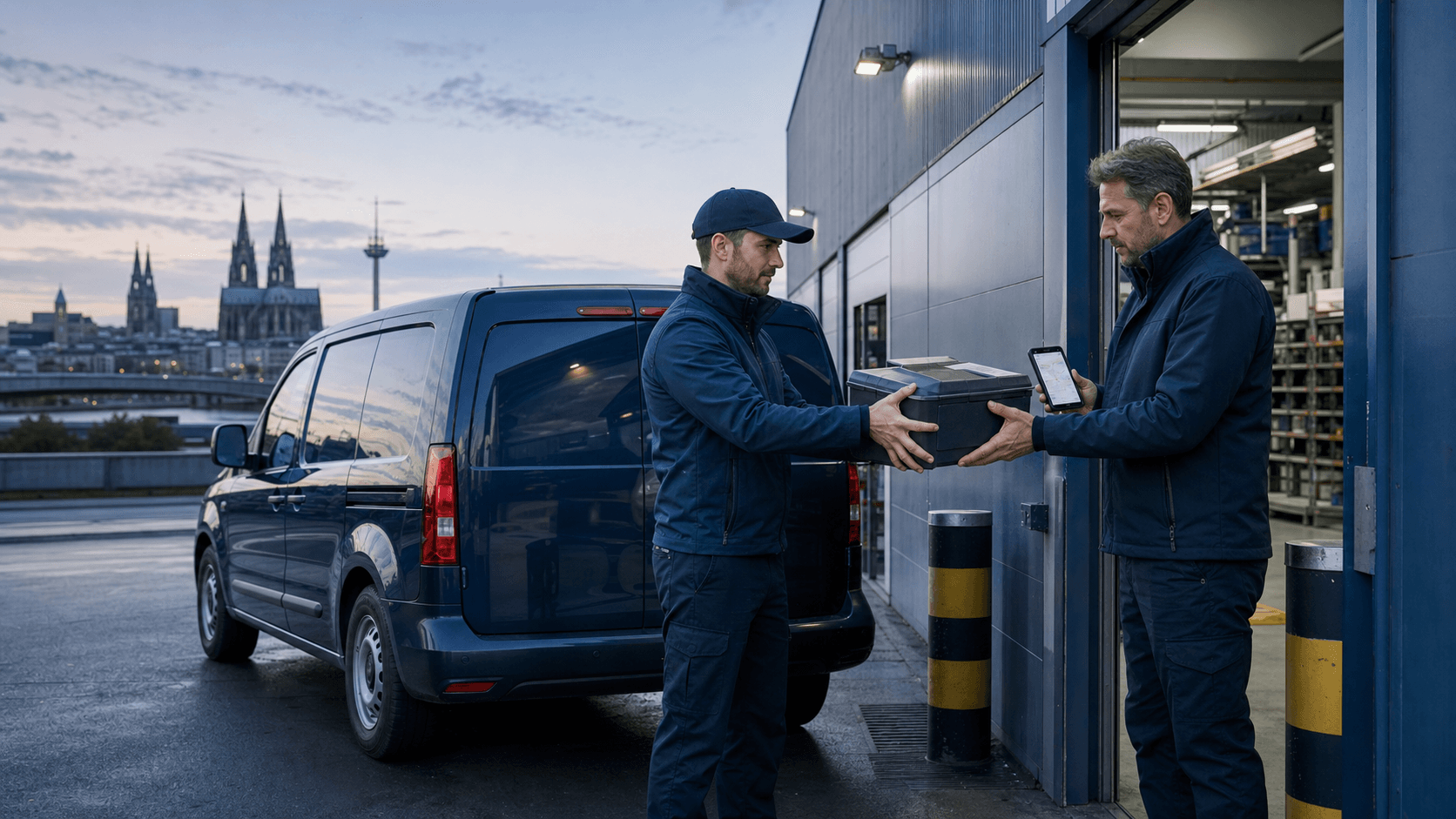
Tracking reduces questions during pickup: customer and store see whether the order is en route or complete. Proof reduces later clarification work: which goods were accepted, when, by whom, and in what condition?
For bulky-goods returns these details matter because goods value, packaging and handling carry more risk than a standard parcel. The proof-of-delivery Help Center article describes typical proof elements such as photo, signature and timestamp. For returns, the same logic is useful: the proof belongs to the transport order, not to a single email or messenger message.
The data every return order should include
Use these fields as the minimum standard:
- customer number or order number.
- RMA, ticket or service case.
- item name, quantity and serial number, if relevant.
- dimensions, weight and packages.
- packaging condition and visible damage.
- pickup address with floor, access and parking note.
- destination address with receiving time and contact person.
- required proof.
- internal next action: inspection, repair, exchange, refund.
If these data points are missing, the return becomes expensive later, even when the transport itself works.
Practical example: furniture return from an online store
A customer wants to return an armchair. The parcel label does not help because the box is large and the customer cannot bring it to a parcel shop.
A good workflow:
- Support asks for dimensions, condition and packaging.
- The store decides: customer pickup, return to warehouse.
- The order contains order number, RMA, floor and phone number.
- The vehicle class is chosen from the box dimensions.
- The customer receives a pickup window and status information.
- The driver documents the handover.
- The warehouse sees the reference and can start inspection or refund.
The difference is not a large systems project. It is treating the return as its own logistics workflow.
In short
Bulky-goods returns become expensive when they are treated like normal parcels. Plan pickup, vehicle, reference, status and proof up front, and the process stays traceable for customer, support, warehouse and accounting.
Maxmove helps with local and regional reverse flows: create the order digitally, choose the right vehicle class, follow status and receive proof. Start with a single return pickup, or evaluate a TMS process with clear references and digital documentation for recurring reverse flows.