
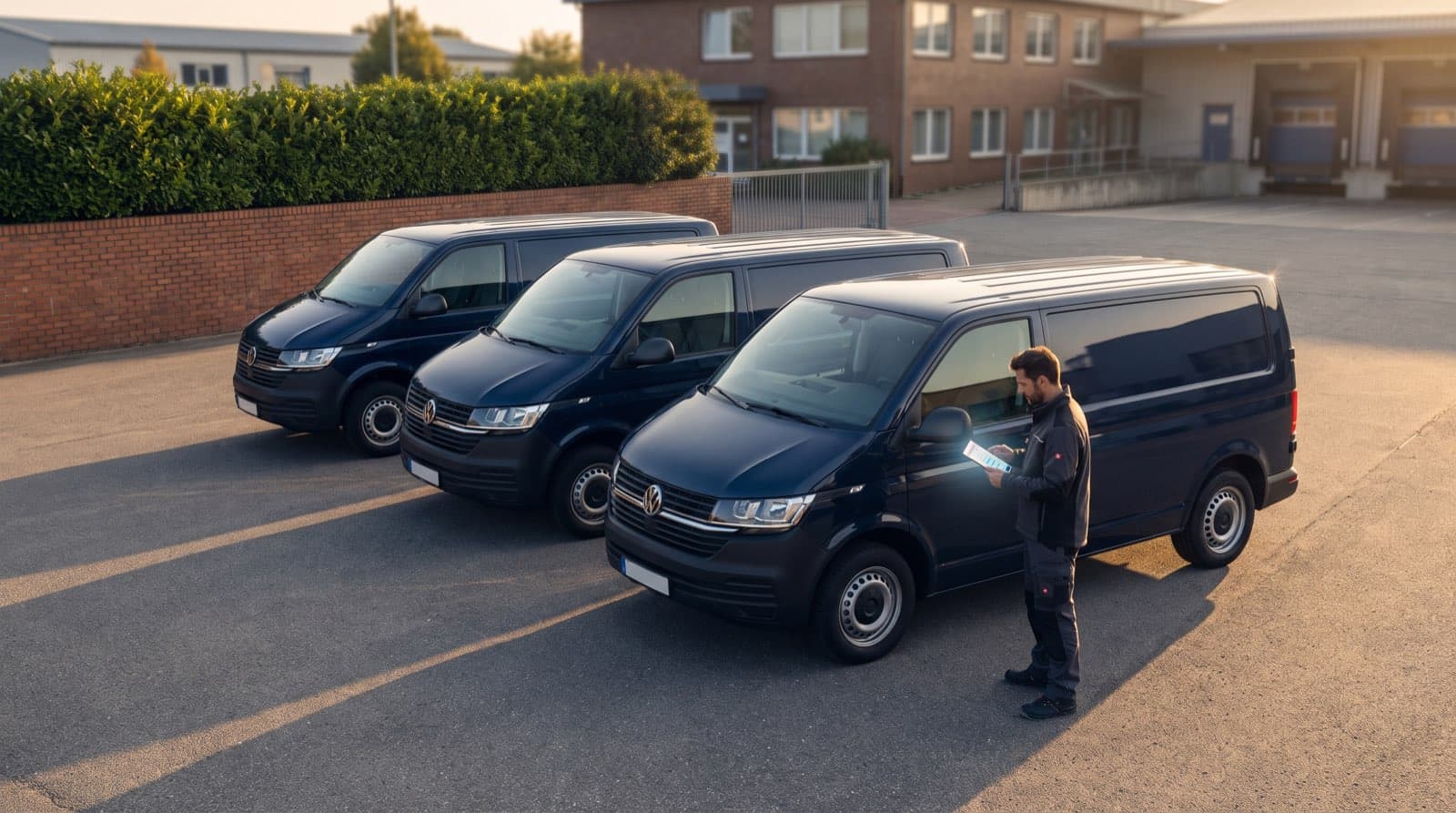
The core problem of almost every small fleet: vehicles are either overbooked or parked. One key account fills the calendar – until it shifts the volume elsewhere. Sustained utilization needs more than one channel. Four routes bring courier businesses new orders, each with a different mix of margin, predictability, and effort.
The four order channels at a glance
| Channel | Order type | Margin | Predictability | Entry |
|---|---|---|---|---|
| Freight exchange (Timocom, Trans.eu) | single runs, spot market | low to medium | low | licence/subscription, due regardless of orders |
| Parcel-network subcontracting (DPD, GLS & co.) | fixed tours, per-stop rates | low | high | contract + vehicle requirements |
| Direct clients | framework agreements, recurring runs | highest | medium to high | months of acquisition |
| Maxmove platform orders | direct drives and small transports in NRW | medium | medium | no subscription, 10–18% commission per order |
Route 1: freight exchanges – bidding for single runs
On Timocom and Trans.eu you search freight, call, negotiate, and drive. Everyone who works them knows the flip side: many carriers bid on popular lanes at once, and prices slide toward cost. Payment is on invoice with negotiated terms – 30 to 60 days are common, and a payment guarantee usually requires paid factoring (at Timocom 2.49 to 4.49% of invoice value depending on the term). Verdict: bidding and phoning for every run, plus a licence that runs regardless of incoming orders – no foundation for a business.
Route 2: parcel-network subcontracting – predictable, but dependent
Fixed tours for parcel networks (DPD, GLS, UPS, Amazon logistics partners) deliver the opposite: full predictability, the same route every day. Pay is per stop or per tour – calculable, but tight. The economics work through stop density and using the vehicles for other work in the afternoon. The risk is dependency: one contract partner sets price, territory, and standards, and adjustments rarely favour the subcontractor. Solid as a building block, fragile as the only pillar.
Route 3: direct clients – best margin, longest ramp-up
Workshops, laboratories, wholesalers, machine builders: whoever regularly moves urgent goods prefers a fixed service provider. This is where the best margin lives – no intermediary, a framework agreement. The price is acquisition: identify decision-makers, win a trial run, build trust over months. Two things accelerate it: visible references (reviews, a Google profile) and a professional appearance on documentation – digital proof of delivery instead of paper slips convinces buyers faster than any brochure.
Route 4: Maxmove platform orders – orders without acquisition or bidding
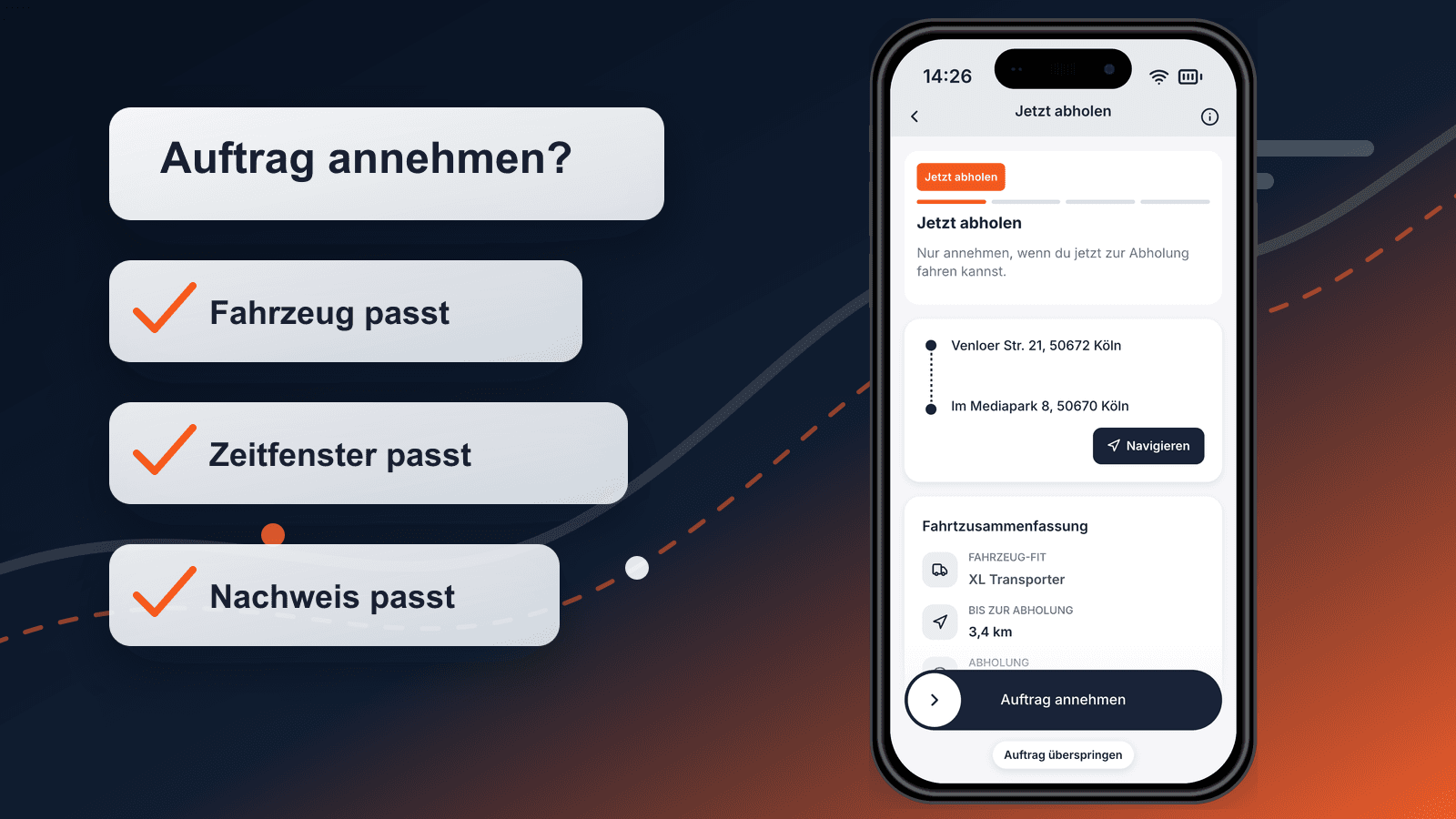
The youngest channel: transport orders that customers book with Maxmove and that vetted fleets accept directly. With Maxmove there is no subscription and no user licence for this: register the fleet, pass the company, identity, carrier-document, and tax-profile checks, set vehicles and territory, and accept matching direct drives and small transports. Maxmove charges a 10–18% commission per completed order. The difference to a freight exchange: you see the earnings before you accept instead of bidding in an underbidding contest, and settlement and proof of delivery run through Maxmove. On top, the Maxmove TMS gives you your own booking page with live prices for direct clients – so the platform channel feeds the direct-client channel over time.
What fits which fleet?
- 1–3 vehicles, starting without a client base: Maxmove platform orders – no fixed subscription cost, earnings visible before you accept, utilization from the day your fleet is approved. First direct clients book in parallel through your booking page in the Maxmove TMS.
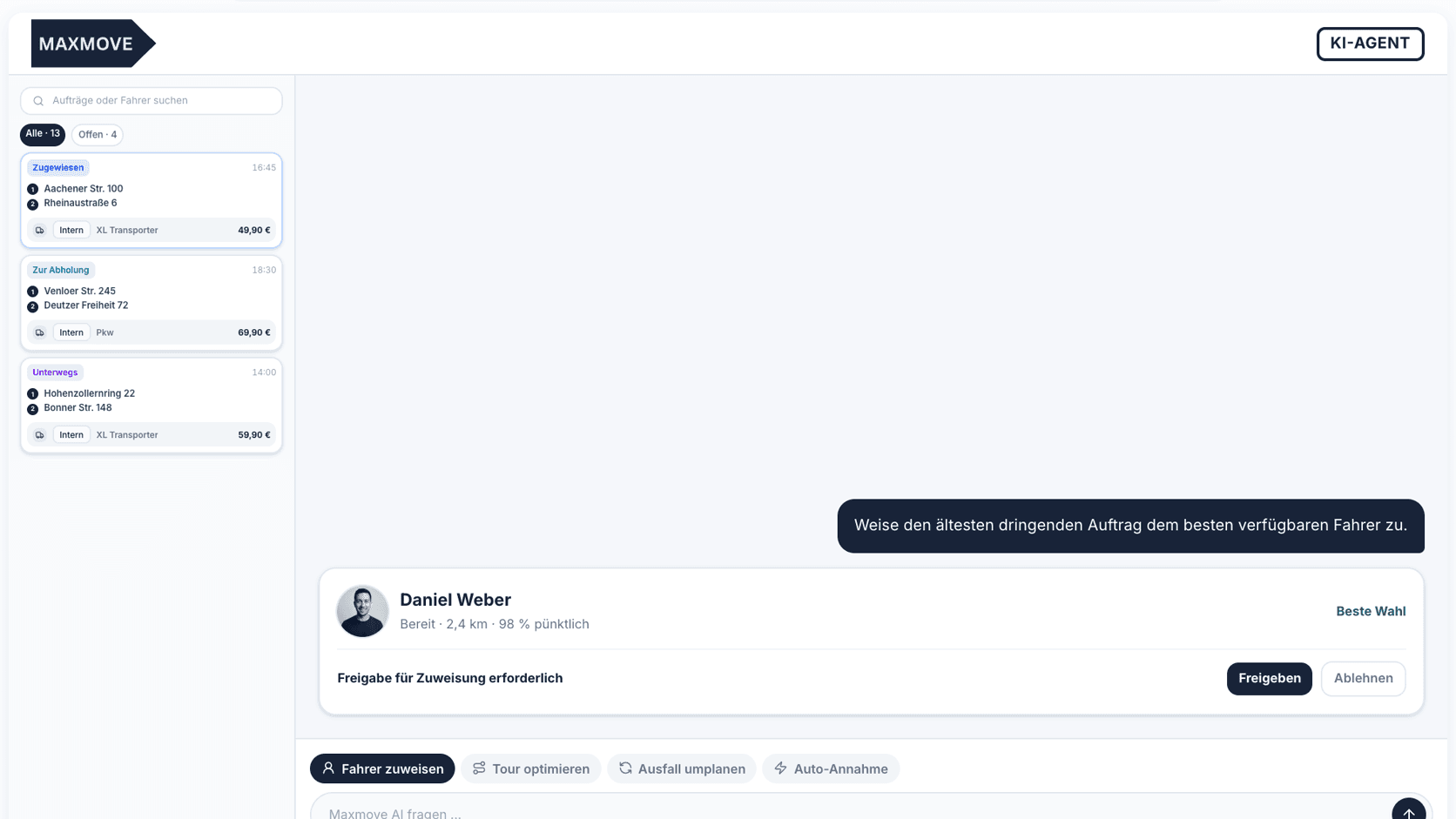
- 5–20 vehicles with a parcel-network base load: fill afternoon and evening capacity via Maxmove platform orders and direct clients; the base load pays the fixed costs, the extra runs pay the margin. You dispatch every order on one board in the Maxmove TMS.
- Specialized fleets (refrigerated, bulky goods, spare parts): direct clients first – specialization beats price competition. With the Maxmove TMS these clients get your own booking page with live prices and online payment, the driver app captures digital proof of delivery, and platform orders fill idle vehicles.
Whatever the channel: accepted orders must be driven efficiently. From a few vehicles upward, dispatch decides the margin – which software helps is covered in Route planning software for couriers.
The operational takeaway
Healthy fleets mix: direct clients bring margin, Maxmove platform orders fill gaps without acquisition effort, subscription, or bidding, and parcel-network tours can carry fixed costs. In the Maxmove TMS, own and platform orders come together in one dispatch. Only one state is unhealthy: a single channel above 80% of revenue.
If you also want to drive as a contractor for other shippers, the terms are set out under Find transport orders.